Showing posts with label medical news. Show all posts

Tuesday, January 26, 2016

Tuesday 01-26-16

Life and snow intrude again yesterday, trying to get back to work tomorrow and at least on a better schedule and more regular posting.  Thanks for your patience. 

This here is a sign of the times and will only be increasing. imo

Drug shortages in American emergency rooms have increased more than 400 percent

Emergency rooms are health care's front line - in the United States, nearly 45 out of 100 people visit an ER in any given year. But there's an issue brewing behind the scenes in emergency medical facilities, one that can't be fixed by a simple stitch or bandage. A new study published in the journal Academic Emergency Medicine shows that drug shortages in ERs across the United States increased by more than 400 percent between 2001 and 2014.
The study analyzed data from the University of Utah Drug Information Service, which receives drug shortage reports submitted through a public site administered by the American Society of Health-System Pharmacists. Two practicing emergency room physicians assessed whether the reported shortages had to do with drugs used in ERs, then looked at whether they were associated with lifesaving or acute conditions.
Of the nearly 1,800 drug shortages reported between 2001 and 2014, nearly 34 percent were used in emergency rooms. More than half (52.6 percent) of all reported shortages were of lifesaving drugs, and 10 percent of shortages affected drugs with no substitute. The most common drugs on shortage are used to treat infectious diseases, relieve pain, and treat patients who have been poisoned. Though the number of shortages fell between 2002 and 2007, they've risen by 435 percent between 2008 and 2014.
That's nothing less than a public health crisis, said Jesse Pines, director of the office for clinical practice innovation at George Washington University School of Medicine & Health Sciences and the study's senior author. Shortages "are real, they're happening, and they're getting worse," he said. Pines, who practices emergency medicine, said that though emergency rooms are implementing things like providing posters with quick alternative drug options, there's no obvious way to cut shortages.

The primary reasons given for shortages were manufacturing delays (25.6 percent), supply and demand (14.9 percent), and availability of raw materials (4.4 percent). Pharmaceutical companies listed "business decision" as the reason for a shortage 2.1 percent of the time. But in over 46 percent of the shortages studied, there was no reason given.
Pharmaceutical Research and Manufacturers of America (PhRMA), an industry group, points the finger at secondary wholesalers. "The manufacturer of a drug has no influence or control over the prices charged by a secondary wholesaler to a hospital or pharmacy," the group said in a statement on its website. Supply chain issues and raw materials shortages can also play into shortages.
The Healthcare Distribution Management Association, a wholesaler industry group, writes that "many factors" may result in product shortages and that they typically happen with "insufficient warning and often [require] significant time and resources to manage."
Could Food and Drug Administration intervention solve the problem? Not exactly: Though the FDA has issued a long-term strategic plan to prevent drug shortages, it admitted it cannot require pharmaceutical companies to make certain drugs, produce more of a drug or change the amount distributed. "There are a number of factors that cause or contribute to drug shortages that are outside of FDA's control," the agency wrote in an infographic about the issue.
Ironically, increased FDA oversight might even create more shortages - researchers note that rather than invest in infrastructure or submit to enhanced inspections, businesses may decide simply to stop producing drugs. "This is one of the byproducts of a focus on cost in health care," explained Pines. "There may be a demand for medication, but it may not be in a company's best interest to produce it because the amount they can charge is often lower than the amount it costs to manufacture it."
It seems simple enough: If companies produce more drugs, more drugs will be available to ERs. But given that the majority of drugs on shortage in emergency rooms are sterile injectables with low profit margins, don't expect that to happen anytime soon. "There are many ways to mitigate drug shortages, but there's no magic bullet to solve them," said Pines. "This could and potentially will get worse."
http://www.chicagotribune.com/lifestyles/health/ct-emergency-room-drug-shortages-20160124-story.html


New development could lead to more effective light bulbs


lighbulb

US researchers say they have developed a technique that can significantly improve the efficiency of the traditional incandescent light bulb.
These older bulbs have been phased out in many countries because they waste huge amounts of energy as heat.
But scientists at MIT have found a way of recycling the waste energy and focusing it back on the filament where it is re-emitted as visible light.
The development has been reported in the journal Nature Nanotechnology.
Little has changed in the technology of the incandescent light bulb since they were commercially developed by Thomas Edison in the US in the 1880s.
They create light by using electricity to heat a thin tungsten wire filament to temperatures of around 2,700C. This causes the filament to glow and produce a broad-spectrum warm white light.
However light bulbs of this type are hugely inefficient - they only convert around 2-3% of the energy they use into light - the rest is wasted as heat.
They have long been a target for green campaigners, concerned about climate change.

Phased out

This has seen the bulbs banned in the European Union, Canada and their manufacture and importation has been phased out in the US.
They've been replaced by more expensive compact fluorescent (CFL) and LED bulbs which are significantly more efficient at around 13%.
Now researchers at MIT believe they have developed a technique that could turn the weakness of the traditional incandescent bulb into a strength.
Using nanotechnology, they've built a structure that surrounds the filament of the bulb and captures the leaking infrared radiation, reflecting it back to the filament where it is re-absorbed and then re-emitted as visible light.
light bulbImage copyright MIT
Image caption This is the proof of concept, higher efficiency incandescent light bulb developed at MIT
The structure is made from thin layers of a type of light-controlling crystal. A key aspect though is the way that these layers are stacked, with visible wavelengths allowed to pass through while infrared get reflected back to the filament as if in a mirror.
"It is not so much the material you make the surrounding structure from, it is how you arrange the material to create the optical filtering property that will recycle infra red light and let the visible light through," Ognjen Illic, the paper's lead author told BBC News.
In theory, the crystal structures could boost the efficiency of incandescent bulbs to 40%, making them three times more efficient than the best LED or CFL bulbs on the market.
The researchers have built their first proof-of-concept units which reach an efficiency of 6.6%, but even that is almost three times the level of a standard incandescent bulb.
So do the researchers think that they can build a better light bulb?
"I would not exclude the possibility," said Prof Marin Soljacic, another author on the paper.
"Thomas Edison was not the first one to work on the design of the light bulb, but what he did was figure out how to mass produce it cheaply and keep it stable longer than 10 hours, these are still the the two critical criteria. These are the questions we are trying to answer now," he said.
The scientists point out that improving light bulbs is but one of the options that could spring from this development. The authors say it could have "dramatic implications" for the performance of other energy conversion technologies.
"We have this huge challenge that the world is facing right now, global warming and energy efficiency and this gives you one more tool in the toolbox to meet that huge challenge," said Prof Soljacic.
"We are very excited about the potential though."

http://www.bbc.com/news/science-environment-35284112

JFK allowed passengers arriving on international flight to exit without going through Customs

Passengers arriving at Kennedy Airport on an international flight were allowed to exit the busy hub without going through Customs — for at least the second time in recent months, the Daily News has learned.
Bumbling airline and security officials let travelers on American Airlines Flight 1223 from Cancun, Mexico, out of the airport on Monday morning without having their passports or bags checked, sources told The News.
The security lapse mirrored a similar incident involving another American Airlines flight in November.
A 34-year-old man who had been in Cancun to attend three Phish concerts told The News he was able to glide from the plane to the baggage claim area without having to endure the usual maze of Customs and Border Protection security checks.


Airline and security officials let travelers on American Airlines Flight 1223 from Cancun, Mexico, out of the airport without having their passports or bags checked, sources told The News.DelMundo, Anthony freelance NYDN/Anthony DelMundo

Airline and security officials let travelers on American Airlines Flight 1223 from Cancun, Mexico, out of the airport without having their passports or bags checked, sources told The News.


EXCLUSIVE: 150 ON FLIGHT FROM MEXICO ALLOWED TO SKIP CUSTOMS, LEAVE JFK
“It’s absolutely absurd,” the business adviser said. “To think that anyone could be walking off of that plane and just get right into the city. It could be terrorists, El Chapo’s henchmen, anyone.”
The jam band fan said he even approached a Transportation Security Administration agent near the exit, but was told he was free to go.
“I told them what happened and asked them what should I do,” the passenger said. “They said to me ‘That’s fine, you’re OK. Go ahead.’ ”
Several other concertgoers who were on the flight were already outside at the curbside cab line when he exited the airport.


Dave Martin/ASSOCIATED PRESS

A man who had been in Cancun to attend three Phish concerts told The News he was able to glide from the plane to the baggage claim area without having to endure Customs and Border Protection security checks.


Neither the TSA, which screens passengers before they fly, nor the U.S. Customs and Border Protection, part of the Department of Homeland Security, responded to a request for comment.
It was unclear how many of the passengers from the flight were able to skip the security checkpoints
WOMAN ACCUSED OF TRYING TO BRIBE TSA CUSTOM AGENT WITH SEX
Hours after the plane landed, American Airline officials pleaded with the Manhattan man — and presumably other passengers — to return to Kennedy and complete the customs process.
“I apologize for any inconvenience this may be for you; however it is a Customs requirement that every passenger entering the United States must clear Customs,” the airline wrote in an email sent to passengers.
“You could tell that they knew they screwed up and were desperate to get me to come,” the passenger added.
The oversight sparked fears that terrorists could easily slip into the country without having to pass through any checkpoints.
“New York remains the number one target for terrorists and it just made me think of Paris and how easy it would be for them to get in,” he said. “It’s incompetence like this that could lead to another attack.”
NYC SLOWLY RETURNS TO NORMAL AFTER MAMMOTH BLIZZARD
A nearly identical incident involving another American Airlines flight from Cancun unfolded in November, just two days after ISIS released a video threatening New York City with a terrorist attack, The News reported.
American Airlines admitted to the latest security snafu in a statement, but declined to say what they were doing about it.
“We take the safety and security of our customers, employees and operation very seriously,” the company said. “Some passengers on flight 1223 did not complete immigration and customs process upon arrival when they were inadvertently directed to the domestic terminal.”
After the November incident, a Customs spokesman told The News that the agency was “aware of and looking into the incident and is working with our counterparts to resolve it.”

http://www.nydailynews.com/new-york/jfk-allowed-passengers-exit-customs-article-1.2507437

Thursday, January 21, 2016

Thursday 01-21-16

10 Beautiful Under-Used Edible Trees and Shrubs to Transform Yards into a Raw Food Paradise
image: http://tftppull.freethoughtllc.netdna-cdn.com/wp-content/uploads/2016/01/edible-landscape.jpg
edible-landscape
As the movement toward local, sustainable food expands across the nation and around the world, more people are recognizing that our own yards offer plenty of opportunity for growing our own. Edible landscaping is the perfect complement to a vegetable garden.
Edible landscaping simply means planting things around the home that provide both food and ornamental value, and can even function as windbreaks or shade. Popular fruit trees like citrus and figs and peaches are all the rage, but there are several lesser-known trees and shrubs that provide fruit and blend well in the landscape.
Here are 10 fruiting trees and shrubs that should be used more in edible landscape designs. Many of them are tougher than the popular fruit trees like peaches and do not require as much maintenance.
Persimmon (Diospyros virginiana). Zones 4 to 9. More common in the South, this attractive tree can grow to 30 ft. tall. They need full sun and well-drained soil. Cultivars like ‘Fuyu’ bear excellent-tasting fruit.  Persimmons have beautiful bark and good fall color.
image: http://tftppull.freethoughtllc.netdna-cdn.com/wp-content/uploads/2016/01/persimmon.jpg
persimmon
Pawpaw (Asimina triloba). Zones 5 to 8. This native tree was an important food source for Native Americans, giving it the nickname “Indian Banana.” This is a very attractive tree that lends a tropical appearance with its large leaves. Small maroon flowers give way to yellowish elongated fruits 4-6 inches long. Two genetically distinct trees are needed for successful pollination.
Pineapple guava (Feijoa sellowiana). Zones 8 to 10. A large shrub or small tree with beautiful flowers and green, egg-shaped, tropical-tasting fruits that fall to the ground when ripe. The flower petals are edible too, with a sweet, fruity taste. Like the pawpaw, they produce more fruit when two genetically distinct trees are planted in close proximity.
image: http://tftppull.freethoughtllc.netdna-cdn.com/wp-content/uploads/2016/01/pineapple-guava.jpg

Mulberry (Morus spp.). Zones 5 to 8. Once known as “King of the Tree Crops,” this is another attractive tree for full sun, although they can handle part shade. They are best situated away from patios and decks as the fruit drop can be messy. Cover the ground with a canvas and shake the tree to get the flavorful little fruits that make excellent jelly, wine and desserts.
image: http://tftppull.freethoughtllc.netdna-cdn.com/wp-content/uploads/2016/01/Mulberry-fruits.jpg
Mulberry fruits
 
Fruiting quince (Cydonia oblonga). Zones 5 to 9. A small, irregularly shaped tree to about 15 ft. tall that can take an interesting gnarled form with age. Attractive spring flowering adds to the appeal. Quince fruits are fragrant and more commonly used to make jelly.
image: http://tftppull.freethoughtllc.netdna-cdn.com/wp-content/uploads/2016/01/fruiting-quince-1.jpg
fruiting quince
Gooseberries and currants (Ribes spp.). Hardy to zone 3. Several different forms and varieties are sold in nurseries, with red currants and American gooseberries being the most common. These plants prefer partial shade and cool, moist growing conditions with good air circulation. They require more maintenance than other fruiting plants, but their fruits are delicious for pies and jellies.
Juneberry (Amalanchier spp.). Zones 3 to 9. A very attractive small tree to 25 ft. covered in white flowers in spring, with fine-textured leaves that turn red in fall. The small purplish-black ripe fruits are eaten fresh, dried, or used in pies and preserves. Grow juneberries in rich, well-drained acidic soil in full sun, although partial shade is recommended for southern regions.
image: http://tftppull.freethoughtllc.netdna-cdn.com/wp-content/uploads/2016/01/Amelanchier_asiatica5.jpg
Amelanchier_asiatica5
Hardy kiwifruit (Actinidia aruguta). Hardy to zone 4. This is a vining plant with grape-size fruits that have an excellent fresh taste similar to standard kiwis but easier to eat. It is an attractive, vigorous perennial vine, so some kind of trellis or support will be needed. However, make sure to prune properly and keep it in bounds, as it has been known to smother surrounding trees and shrubs.
Highbush cranberry (Viburnum opulus var. Americana). Zones 2 to 7. A shrub growing to 15 ft. tall with a formal, rounded shape that is well-suited for privacy screens. Flowers and fruits are showy. The small red fruits remain on the plants for a long time and brighten the winter landscape, although they are best harvested earlier for good taste.
image: http://tftppull.freethoughtllc.netdna-cdn.com/wp-content/uploads/2016/01/Viburnum_opulus_C.jpg
Viburnum_opulus_C
Cornelian cherry (Cornus mas). Zones 5 to 8. This is a small, upright trees to 15 ft. tall with attractive bark, flowers, and fall color. Although full sun is preferred, they do quite well in partial shade underneath larger trees. The fruits ripen to a dark maroon and are excellent for jellies, tarts, and sweetmeats.


Not only are the dealing with lead in the water but this also

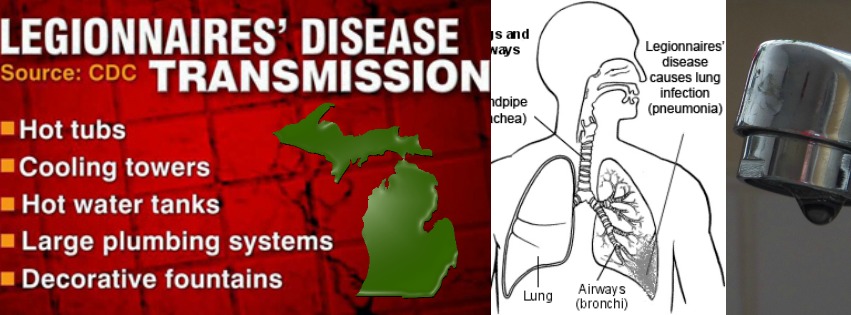
State of Emergency Declared As Legionnaires’ Disease Spikes in Flint Michigan

legionnaires disease flint
By Brandon Turbeville
As if Flint, Michigan needed more problems other than an economic depression which has left the city a virtual wasteland, Flint is now the scene of a massive poisoned water scandal that has seen lead flooding the city’s drinking water supplies. Now, on top of the water emergency, a sharp increase in Legionnaires’ disease is hitting the community.
State officials were forced to admit at a press conference on Wednesday that there was indeed an uptick in the cases of Legionnaires’ disease and that they have “yet to determine the cause of the disease.” Chief medical executive of the Michigan department of health and human services said that a more thorough analysis was in the works. Officials gave no new advice to Flint residents regarding their water usage in relation to the Legionnaires’ uptick. RT reports that “between June 2014 and November 2015, there were 87 cases of Legionnaires’ disease in Flint, with 10 ending in death, according to Wells. The fatality rate for the disease ranges from 5-30% depending on access to antibiotics and other factors, according to the U.S. National Library of Medicine.”
As Kahlil AlHajal writes for MLive.com:
From June 2014 to March 2015, 45 cases of Legionella bacteria were confirmed in Genesee County, according to the state Health and Human Services Department Director Nick Lyon.
Seven of those cases were fatal.
From May 2015 to November 2015, 42 cases were confirmed in Genesee county.
Three of those were fatal.
Chief Medical Executive for the Health and Human Services Department Eden Wells said “87 cases is a lot. That tells us that there is a source there that needs to be investigated.”
The lead poisoning of Flint’s water began in April 2014 when the city’s drinking water was switched from Lake Huron to the Flint River. The water from Flint River was sent to a city water treatment plant but the facility neglected to check the water’s salt levels which would eventually cause the lead pipes to corrode. This led to the high presence of the toxic substance in the city’s drinking water.
It is noteworthy that the change of water sources was noticed by Flint residents immediately. Yet while they complained of bad smells and bad tastes after the water sources changed it was not until October 2015 that the Department of Environmental Quality admitted that it was responsible for the lead poisoning because it did not add the necessary chemicals that would have combated the corrosion of the pipes.
Flint’s water source was switched back to Lake Huron in October. Unfortunately, the water is still poisoned.
Michigan Governor Rick Snyder declared a State of Emergency in early January and activated the Michigan Army National Guard to work with the Michigan State Police and other officials on Tuesday. Emergency personnel will be dispensing bottled water, filters and test kits door-to-door. Parents of children six years or younger are being encouraged to go to the hospital to have their blood tested for lead exposure.

This article (State of Emergency Declared As Legionnaires’ Disease Spikes in Flint Michigan) can be republished under this share-alike Creative Commons license with  attribution to Brandon Turbeville, the article link and Natural Blaze.com.
Brandon Turbevillearticle archive here – is an author out of Florence, South Carolina. He is the author of six books, Codex Alimentarius — The End of Health Freedom, 7 Real Conspiracies, Five Sense Solutions and Dispatches From a Dissident, volume 1and volume 2, The Road to Damascus: The Anglo-American Assault on Syria, and The Difference it Makes: 36 Reasons Why Hillary Clinton Should Never Be President
Prices are accurate as of January 20, 2016 9:29 am
. Turbeville has published over 600 articles dealing on a wide variety of subjects including health, economics, government corruption, and civil liberties. Brandon Turbeville’s podcast Truth on The Tracks can be found every Monday night 9 pm EST at UCYTV. He is available for radio and TV interviews. Please contact activistpost (at) gmail.com.

http://www.naturalblaze.com/2016/01/state-of-emergency-declared-as-legionnaires-disease-spikes-in-flint-michigan.html

Wednesday, August 26, 2015

Wednesday 08-26-15

Illegal Aliens Have Second Amendment Rights, Says 7th Circuit Court of Appeals

As America is riled over the rights of illegal aliens to bear native children in these United States, the 7th Circuit Court of Appeals ups the ante of alienfear: the law should not be able to bar them from owning or bearing weapons just because they are not citizens.

The decision comes in the case of U.S. v. Meza-Rodriguez. Excerpts with commentary from a decision from Judge Diane Wood:
Milwaukee police on August 24, 2013
responded to a report that an armed man was at a local bar. The officers obtained a surveillance video showing a man pointing an object that resembled a firearm. Witnesses later identified that man as Meza-Rodriguez. A few hours later, the same officers responded to a different report of a fight at a neighboring bar. The officers broke up the fight and recognized MezaRodriguez as the man from the surveillance video. After a foot chase, they apprehended him and patted him down. This brief search turned up a .22 caliber cartridge in his shorts pocket.
That man was Mariano Meza-Rodriguez, brought to the U.S. when he was a child by his parents but never a legitimate citizen here.
He was charged with violating federal statute 18 U.S.C. § 922(g)(5), which makes it illegal for an alien to "possess in or affecting commerce, any firearm or ammunition."
Meza-Rodriguez claims the prosecution violated his Second Amendment rights. Two lower courts denied that illegal aliens had any Second Amendment rights.
What does the 7th Circuit think? (Meza-Rodriguez was booted from the country, and that conviction would bar him from return.) Who are the "people" the Second Amendment protects, and does it include non-citizen aliens here in the States?
The Court notes what some other courts have thought about that question:
[N]either Heller nor any other Supreme Court decision has addressed the issue whether unauthorized noncitizens (or noncitizens at all) are among “the people” on whom the Amendment bestows this individual right. A few other courts of appeals have reached this issue, however, and have concluded, based on language in Heller, that the Amendment does not protect the unauthorized. See United States v. Carpio-Leon, 701 F.3d 974, 979 (4th Cir. 2012); United States v. Flores, 663 F.3d 1022, 1023 (8th Cir. 2011) (per curiam); United States v. Portillo-Munoz, 643 F.3d 437, 442 (5th Cir. 2011); see also United States v. Huitron-Guizar, 678 F.3d 1164, 1169–70 (10th Cir. 2012) (declining to reach the issue because § 922(g)(5) passes intermediate scrutiny in any case). 8 No. 14-3271

The Court decides the "people" in the Second Amendment are the same "people" as in other amendments, like the Fourth. Thus, they look at what the Supreme Court has said about the Fourth Amendment and "people" in the Verdugo-Urquidez case.
That case roughly concluded that only aliens with "substantial ties" in the U.S. could expect those constitutional protections. The Court thinks that Meza-Rodriguez qualifies. He was here voluntarily and has:
resided here from the time he arrived over 20 years ago at the age of four or five until his removal. He attended public schools in Milwaukee, developed close relationships with family members and other acquaintances, and worked (though sporadically) at various locations. This is much more than the connections our sister circuits have found to be adequate
Having a criminal record, which Meza-Rodriguez did, is not enough to bar him from having this substantial connection with the U.S. under Verdugo-Urquidez. Plyer v. Doe (1982) (a case about school funding for non citizens) is another Supreme Court case the 7th Circuit relies on to conclude that an alien can be a person with constitutional rights in the U.S.
Thus, their zinger of a conclusion on the question of, does Meza-Rodriguez or other illegal aliens have a Second Amendment right to call on? is absolutely:
In the post-Heller world, where it is now clear that the Second Amendment right to bear arms is no second-class entitlement, we see no principled way to carve out the Second Amendment and say that the unauthorized 14 No. 14-3271 (or maybe all noncitizens) are excluded. No language in the Amendment supports such a conclusion, nor, as we have said, does a broader consideration of the Bill of Rights.

The 7th Circuit has a tradition of being nicely respectful of Second Amendment rights, having in the Moore v. Madigan case in 2012 overturned complete bans on public carry in Illinois, 
But that doesn't mean everything is OK for Mr. Meza-Rodriguez.
This is one of those subtle cases where a right that the defendant was trying to assert was declared valid by the Court, but the defendant still lost his case. We saw a similar dynamic in the important 2001 case U.S. v. Emerson in the 5th Circuit that launched the modern era of Second Amendment jurisprudence explicitly recognizing an individual right in the amendment that resulted in the important Heller decision.
There as well the right was upheld but the defendant found guilty anyway, more or less because the Court could see a pro-government loophole in the right.
In this case, the Court concluded, well, of course, while he has a Second Amendment right, no right is absolute and that:
Congress’s interest in prohibiting persons who are difficult to track and who have an interest in eluding law enforcement is strong enough to support the conclusion that 18 U.S.C. § 922(g)(5) does not impermissibly restrict Meza-Rodriguez’s Second Amendment right to bear arms. We thus AFFIRM the district court’s denial of his motion to dismiss.
It strikes me (not a lawyer) that the fine distinction the Court drew here might not make much difference, since surely in most cases it could be argued that nearly by definition an illegal alien might have that characteristic of being "difficult to track" and with "an interest in eluding law enforcement."
In fact, that can apply to all sort of citizens as well so I hope Congress never chooses to pass a law making it illegal to own a gun if you don't want to be talked to by cops for whatever reason.
Legal scholar Josh Blackman has this speculation about the case, after spelling out as per the case that "Judge Wood parted company with the 4th, 5th, 8th, and 10th Circuits" with the aliens-can-have-Second-Amendment-rights holding and thus created a point ripe for Supreme Court consideration:
Will the government seek certiorari here? It’s a close call. They won on the underlying issue, but lost on the question of the applicability of the 2nd Amendment. Such a ruling opens up other possible 2nd Amendment challenges by resident aliens who cannot bear arms. This could be the first time the federal government has petitioned for cert on a 2nd Amendment case since Heller itself!

 http://reason.com/blog/2015/08/24/ilegal-aliens-have-second-amendment-righ


Straight Talk About Expiration Dates

Antibiotics
Years ago, I wrote an article about the truth relating to expiration dates on medications. Lately, I’ve seen some confusing information on the internet that tells you how dangerous they are while telling you that, in a survival scenario, you should probably use them. So I think it’s time to set the record straight with regards to expiration dates on medications.
Before I start, I want to tell you that my focus is medical preparedness for major disasters and long-term survival. That means a strategy of putting together stockpiles of supplies that might save a life in times of trouble. In normal times, when you can just call your doctor for a fresh prescription, seek modern care by qualified professionals.
Now, what you need to know. Expiration dates were first mandated in the us in 1979. They are the last day that a drug company will guarantee 100% potency of a medicine. These medicines do not, by and large, become toxic after the expiration date. I promise you that you will not grow a horn in the middle of your forehead if you take a pill the week after it expires.
In many cases, drugs in pill, powder, or capsule form will be 100% potent for years after their expiration date. How do I know this? FEMA, the federal emergency management agency, and the Department of Defense stockpiles millions of doses of medications used in emergency settings. In the past, When those drugs expired, they were discarded.
This gets to be pretty expensive, so a study was performed called the shelf life extension program, something I first wrote about years ago. This program found that most medications, as long as they are in pill or capsule form, were still effective after their expiration dates, sometimes for years. As such, I recommended not throwing them away but, instead, making them part of your survival medical storage.
This, by the way, was not the case for medicines in liquid form. They lost potency quickly after their expiration dates, so are not useful for long-term survival settings.
These findings led the government to put out extensions of expiration dates for certain drugs as needed, such as the 5 year extension given the anti-viral drug tamiflu during the 2009 swine flu epidemic.
Despite this, you’ll see quotes, often from academic types, that medications are dangerous when expired and should be tossed. These opinions are fine in normal times, but if you’re reading this article, you’re probably a member of the preparedness community or at least interested in the subject. You might even be the person that would be medically responsible in situations when the rescue helicopter is heading the other way.
Good, you’re exactly who I want to talk to. you may one day have to make a decision in a true disaster setting about whether or not to use an expired medication.
Let’s say a loved one is fading from an infection. Something bad has happened and you’re off the grid with little or no hope of getting to modern medical care. You have an expired bottle of antibiotics. What are you going to do? Someone you love is dying. Are you going to use the expired drug or not? Exactly.
Of course, medicines should be stored in cool, dry, dark conditions. Their potency will fade twice as fast if stored at 90 degrees as if stored at 50 degrees. Freezing them, however, is rarely helpful. Even if stored in suboptimal conditions, a capsule or tablet that hasn’t changed color or consistency is probably still worth keeping for austere settings.
Sometimes, In a true disaster, the issues that will facing the medically responsible will be very basic. What’s the problem? Do I have medicine that will treat it? Could this medicine, although it has expired, possibly save a life? When it comes down to it, can you really choose to not use it to prevent a death because it may possibly have side effects or not be quite as strong as it was?
I say: In this situation, don’t withhold a drug because some professors said it wasn’t a good idea to use it. Believe me, they weren’t seriously considering a time when an expired medication might be the only option you have left.
Let’s hope it never gets to that point, but preparing for the worst, while hoping for the best isn’t a bad strategy to deal with the uncertain future.

http://www.thesurvivalistblog.net/straight-talk-expiration-dates/

Friday, December 5, 2014

Friday 12-05-14

Jelly Charcoal Poultice

Jelly Charcoal Poultice

1.    Grind 3 tablespoons of flaxseed (or use cornstarch)
2.    Mix flax meal together with 1-3 tablespoons of charcoal powder.
3.    Add 1 cup water.
4.    Set aside for 10-20 minutes to thicken, or mixture may be heated and allowed to cool.
 
Making a Charcoal Poultice - step 1
 
5.    Spread the jelly evenly over an appropriate size cloth or paper towel.
6.    Cover the jelly with a second cloth or paper towel.
 
Making a Charcoal Poultice - step 2
 
Making a Charcoal Poultice - step 3
 
7.    Position poultice over the area to be treated (i.e. - liver, stomach, kidneys, spleen, knee, eye, ear, sting or bite area).
 
Making a Charcoal Poultice - step 4
 
8.    Cover the poultice with plastic (when available, plastic food wrap works fine) cut to overlap the poultice by an inch on every side . This will keep it from drying out. If the charcoal dries out, it will not be able to adsorb.
 
 Making a Charcoal Poultice - step 5
 
9.    Finish off by bandaging or taping the poultice securely in place. Leave it on from 2-4 hours, if applied during the day, or better yet, overnight. After 6 to 10 hours another poultice can be applied.
 
Making a Charcoal Poultice - step 6
 
Making a Charcoal Poultice - step 7
 
Note: Poultices of any kind only work if there is continuous moist contact with the skin.
 
Making a Charcoal Poultice - step 8
Plain Charcoal Poultice

Plain Charcoal Poultice

This poultice, without any thickening agent, is a variation of the one described above. Consequently the charcoal may dry out more quickly and will need to be changed or remoistened.

1.    Mix charcoal (1 to 2 Tbs.) with a little water to form a wet paste. It should be moist but not crumbly or drippy.

2.    Spread the paste on one half of a folded paper towel, loosely woven cloth, or piece of gauze cut to fit the area to be treated. When ready the cloth should be moist, and thoroughly saturated with the paste.
3.    Then cover the paste by folding over the other half of the paper towel or cloth.
4.    Next place the charcoal poultice on the affected body part making sure it completely covers the area.
5.    Cover the poultice with plastic (when available, plastic food wrap works fine) cut to overlap the poultice by an inch on every side. This will keep it from drying out. If the charcoal dries out, it will not be able to adsorb.
6.    Finish off by bandaging or taping the poultice securely in place. Leave it on for several hours, or better yet, overnight. After 6 to 10 hours another poultice can be applied.

http://www.charcoalremedies.com/charcoal_poultice

Tuesday, December 2, 2014

Tuesday 12-02-14

Found this interesting skill on a site today, thought it was worth looking at

How to remove a fish hook from a finger

Here are two videos showing the tools and method to remove a hook stuck in you or a friend.

Captain Vincent Russo Explains how to remove a fish hook & his personal First Aid Kit.
 
Capt. Russo has many very good and informative fishing videos including a newer way to filet a Red-Fish using an unconventional wide, curved, heavy blade knife. Very interesting. Plus it's a good excuse for buying another knife! :-)

How To Remove A Hook From Finger (REAL FOOTAGE!)
Angler hooks himself in the finger with a treble hook. Brad Wiegmann (outdoor writer) was on the scene with (ATF Pro Staff) Chad Lamberth and Nech Wilderness (founder) Joe Nech at Lake Fork in Alba, Texas when the incident occurred. Brad helps the gentlemen out by removing the hook and shows us the proper way to do so.
  
It is guaranteed that if you fish, some day you will hook yourself! Ugh...now what?
The important tool to add and keep in your tackle box is a new high quality pair of dikes or what I have is a quality heavy duty cutting force-multiplier wire cutters shown in the photo. Hear in Florida some of the hooks we use are big with sometimes three times the wire diameter of a typical bass fishing hook. You will need a sharp edged hardened steel cutting blade to do the job.
 
Before you assume that rusty old pair of dikes you have in your tool box will do the job, test cut (practice) on some of your hooks to be sure it will do the job and you understand the technique. Even sacrifice some old lures that haven't caught any fish anyways, this is a good excuse to get rid of them!! You don't want to wiggle the hook around while stuck in you or your friend causing more pain and discomfort.

Also practice this method in a rubber sole shoe like Capt. Russo shows. A little practice will make this a no-brainer when you or your wife must do this.


Serious wire/hook cutters


Maurice Sporting Goods FAK-1 Fish Hook Removal Kit


http://livingprepared.blogspot.com/2014/11/how-to-remove-fish-hook-from-finger.html

Friday, January 11, 2013

Friday 01-11-13

With an eye on China, what are they up too.  Got this email from a friend, thought it was worth posting

They Are Getting Ready: "No Obvious Reason" For Why China Is Massively Boosting Stockpiles of Rice, Iron Ore, Precious Metals, Dry Milk
United Nations agricultural experts are reporting confusion, after figures show that China imported 2.6 million tons of rice in 2012, substantially more than a four-fold increase over the 575,000 tons imported in 2011. The confusion stems from the fact that there is no obvious reason for vastly increased imports, since there has been no rice shortage in China. The speculation is that Chinese importers are taking advantage of low international prices, but all that means is that China’s own vast supplies of domestically grown rice are being stockpiled.
Why would China suddenly be stockpiling millions of tons of rice for no apparent reason?
Perhaps it’s related to China’s aggressive military buildup and war preparations in the Pacific and in central Asia.
If there were ever a sign that something is amiss, this may very well be it.

If a 400% year-over-year increase in rice stockpiles isn’t enough to convince you the Chinese are preparing for a significant near-term event, consider that in Australia the country’s two major baby formula distributors have reported they are unable to keep up with demand for their dry milk formula products. Grocery stores throughout the country have been left empty of the essential infant staple as a result of bulk exports by the Chinese.
A surge in sales of one of Australia’s most popular brands of infant formula has led to an unusual sight for this wealthy nation: barren shelves in the baby aisle and even rationing of baby food in some leading retail outlets.
We’d be more apt to believe the Chinese were panic-buying baby formula had the Chinese milk scandal occurred recently. The problem is that it happened four years ago. Are we to believe the Chinese are just now realizing their baby food may be tainted?
In addition to the apparent build-up in food stocks, the Chinese are further diversifying their cash assets (denominated in US Dollars) into physical goods. In fact, in just a single month in 2012, the Chinese imported and stockpiled more gold than the entirety of the gold stored in the vaults of the European Central Bank (and did we mention they did this in one month?). Their precious metals stockpiles have grown so quickly in recent years that Chinese official holdings remain a complete mystery to Western governments and it’s rumored that the People’s Republic may now be the second largest gold hoarding nation in the world, behind the United States. the current run-rate of accumulation which is just shy of 1,000 tons per year, it is certainly within the realm of possibilities that China is now the second largest holder of gold in the world, surpassing Germany’s 3,395 tons and second only to the US.
But the Chinese aren’t just buying precious metals. They’re rapidly acquiring industrial metals as well.
Spot iron prices are up to an almost 15-month high at $153.90 per tonne. The rally in prices, which started in December 2012, is mainly due to China’s rebuilding of its stockpiles as the Asian giant gears to boost its economy, which in turn, could improve steel demand.
Now, why would China be stockpiling even more iron (and setting 15 month price highs in the process) if they had massive amounts of excess inventory just last year?
Something tells us this has nothing to do with an economic recovery, or even economic theory in terms of popular mainstream analysis.
Why does China need four times as much rice year-over-year? Why purchase more iron when you already have a huge surplus? Why buy gold when, as Federal Reserve Chairmen Ben Bernanke suggests, it is not real money? Why build massive cities capable of housing a million or more people, and then keep them empty?
It doesn’t add up. None of it makes any sense. Unless the Chinese know something we haven’t been made privy to.
Is it possible, in a world where hundreds of trillions of dollars are owed, where the United States indirectly controls most of the globe’s oil reserves, and where super powers have built tens of thousands of nuclear weapons and spent hundreds of billions on weapons of war (real ones, not those pesky semi-automatic assault rifles), that the Chinese expect things to take a turn for the worse in the near future?
The Chinese are buying physical assets – and not just representations of those assets in the form of paper receipts – but the actual physical commodities. And they are storing them in-country. Perhaps they’ve determined that U.S. and European debt are a losing proposition and it’s only a matter of time before the financial, economic and monetary systems of the West undergo a complete collapse.
At best, what these signs indicate is that the People’s Republic of China is expecting the value of currencies ( they have trillions in Western currency reserves) will deteriorate with respect to physical commodities. They are stocking up ahead of the carnage and buying what they can before their savings are hyper-inflated away.
At worst, they may very well be getting ready for what geopolitical analyst Joel Skousen warned of in his documentary Strategic Relocation, where he argued that some time in the next decade the Chinese and Russians may team up against the United States in a thermo-nuclear showdown.

Hard to believe? Maybe.

But consider that China is taking measures now, in addition to their stockpiling, that suggest we are already in the opening salvos of World War III. They have already taken steps to map our entire national grid – that includes water, power, refining, commerce and transportation infrastructure. They’re directly involved in hacking government and commercial networks and are responsible for what has been called the greatest transfer of wealth in the history of the world. Militarily, the PRC has been developing technology like EMP weapons systems, capable of disabling our military fleets and the electrical infrastructure of the country as a whole, and has been caught red-handed manufacturing fake computer chips used in U.S. Navy weapons systems.
If you still doubt China’s intentions and expectations, look to other governments, including our own, for signs that someone, somewhere is planning for horrific worst-case scenarios:
■The Russians have scheduled 5,000 underground bunkers for completion this year.

■Europe rapidly designed, built and stocked the so-called Doomsday Seed Vault in Svalbard, Norway, which contains tens of thousands of varieties of seeds and is supposed to preserve them in the event of Armageddon style events like asteroid impacts or nuclear war.
■The United States government has been stockpiling tens of millions of emergency meals and other supplies and regionalizing their emergency distribution centers across the country (curiously, those supplies never made it to Hurricane Sandy victims)
■The government has purchased nearly 2 billion rounds of ammunition in the last few years.

■The Pentagon has been Actively War Gaming ‘Large Scale Economic Breakdown’ and ‘Civil Unrest’

■China recently made a call, through their Xinhua news agency, for the complete disarmament of the American population (Behind every blade of grass…)
Perhaps there’s a reason why former Congressman Roscoe Bartlett has warned, “those who can, should move their families out of the city.”

As Kyle Bass noted in a recent speech, “it’s just a question of when will this unravel and how will it unravel.”
Given how similar events have played out in history, we think you know how this ends.
It ends through war.
Governments around the world are stockpiling food, supplies, precious metals and arms, suggesting that there is foreknowledge of an impending event.
Should we be doing the same?

http://www.shtfplan.com/headline-news/they-are-getting-ready-no-obvious-reason-for-why-chinese-rice-stockpiles-jumped-400-massive-boosts-in-dry-milk-iron-ore-precious-metals-imports_01092013

Found these two "commercial" interesting, never visited MTV before, but what the hey the two commercials are pretty good, and not prophetic.  Both are short


Ancient Shipwreck Reveals 2,000-Year-Old Eye Medicine

Ancient gray disks loaded with zinc and beeswax found aboard a shipwreck more than 2,000 years old may have been used as medicine for the eyes, researchers say.
These new findings shed light on the development of medicine over the centuries, scientists added.
Scientists analyzed six flat gray tablets approximately 1.6 inches (4 centimeters) in diameter and 0.4 inches (1 cm) thick that were found in a round tin box aboard the so-called Relitto del Pozzino shipwreck, which was discovered about 60 feet (18 meters) underwater in 1974 on the seabed of the Baratti Gulf off the coast of Tuscany. The hull, only 50 to 60 feet (15 to 18 m) long and about 10 feet (3 m) wide, dated back to about 140 B.C.
The Roman shipwreck lay near the remains of the Etruscan city of Populonia, which at the time the ship foundered was a key port along sea trade routes between the west and east across the Mediterranean Sea. A number of artifacts were unearthed during the excavation, including wine jars, an inkwell, tin and bronze jugs, stacks of Syrian-Palestinian glass bowls and Ephesian lamps. [Shipwrecks Gallery: Secrets of the Deep]
"Such objects suggest that the ship, or at least a great part of its cargo, came from the east, probably the Greek coasts or islands," the researchers wrote in a study detailed online Jan. 7 in the journal the Proceedings of the National Academy of Sciences.
The cargo also included medical equipment, such as an iron probe and a bronze vessel that may have been used for bloodletting or for applying hot air to soothe aches. These findings suggest a physician was traveling by sea with his professional equipment, the researchers said.
To learn more about these potentially medicinal tablets, researchers investigated the chemical, mineralogical and botanical composition of fragments of a broken tablet.
"In archaeology, the discovery of ancient medicines is very rare, as is knowledge of their chemical composition," the researchers wrote. "The data revealed extraordinary information on the composition of the tablets and on their possible therapeutic use."
The disks were about 80 percent inorganic, with zinc making up about 75 percent of the inorganic components. Zinc compounds have been known since ancient times to serve as medicines, with the ancient Roman naturalist Pliny the Elder writing that they could help treat the eyes and skin.
The tablets also contained starch, pine resin, beeswax and a mix of plant- and animal-derived fats, perhaps including olive oil. Starch was a known ingredient of Roman cosmetics, olive oil was used for perfumes and medicines, and pine resin may have kept the oil from going rancid and fought microbes due to its antiseptic properties.
Pollen grains were numerous, with about 1,400 grains per gram seen in the tablets. These came from olive, wheat and many other plants, such as stinging nettles and alder trees. However, about 60 percent of this pollen came from plants that are pollinated by insects such as bees, suggesting they may inadvertently have hitched along in a bee product such as beeswax instead of getting intentionally added to the medicine.
Linen fibers were seen, which may have helped keep the tablets from crumbling. Charcoal was detected as well, which may be residue from other ingredients or was potentially added intentionally.
Intriguingly, the Latin word for eyewash, "collyrium," derives from a Greek word meaning "small round loaves." This fact highlights the notion that these small round tablets are linked with eye health.
"This study provided valuable information on ancient medical and pharmaceutical practices and on the development of pharmacology and medicine over the centuries," the researchers said. "In addition, given the current focus on natural compounds, our data could lead to new investigations and research for therapeutic care."

http://news.yahoo.com/ancient-shipwreck-reveals-2-000-old-eye-medicine-160107876.html

Wednesday, January 2, 2013

Wednesday 01-02-13

There is a lot bigger fiscal xliff a real one, that will sink the country and they wont do a thing about it.  Amazing

Fiscal Cliff Deal: $1 in Spending Cuts for Every $41 in Tax Increases

According to the Congressional Budget Office, the last-minute fiscal cliff deal reached by congressional leaders and President Barack Obama cuts only $15 billion in spending while increasing tax revenues by $620 billion—a 41:1 ratio of tax increases to spending cuts.


When Presidents Ronald Reagan and George H.W. Bush increased taxes in return for spending cuts—cuts that never ultimately came—they did so at ratios of 3:1 and 2:1.
“In 1982, President Reagan was promised $3 in spending cuts for every $1 in tax hikes,” Americans for Tax Reform says of those two incidents. “The tax hikes went through, but the spending cuts did not materialize. President Reagan later said that signing onto this deal was the biggest mistake of his presidency.
"In 1990, President George H.W. Bush agreed to $2 in spending cuts for every $1 in tax hikes. The tax hikes went through, and we are still paying them today. Not a single penny of the promised spending cuts actually happened.”

http://www.breitbart.com/Big-Government/2012/12/31/Fiscal-cliff-deal-41-1-in-tax-increases-to-spending-cuts-ratio

Vomiting Larry battles "Ferrari of the virus world"
Poor Larry isn't looking too good. He's pale and clammy and he's been projectile vomiting over and over again while his carers just stand by and watch.
Yet their lack of concern for Larry is made up for by their intense interest in how far splashes of his vomit can fly, and how effectively they evade attempts to clean them up.
Larry is a "humanoid simulated vomiting system" designed to help scientists analyze contagion. And like millions around the world right now, he's struggling with norovirus - a disease one British expert describes as "the Ferrari of the virus world".
"Norovirus is one of the most infectious viruses of man," said Ian Goodfellow, a professor of virology at the department of pathology at Britain's University of Cambridge, who has been studying noroviruses for 10 years.
"It takes fewer than 20 virus particles to infect someone. So each droplet of vomit or gram of feces from an infected person can contain enough virus to infect more than 100,000 people."
Norovirus is hitting hard this year - and earlier too.
In Britain so far this season, more than a million people are thought to have suffered the violent vomiting and diarrhea it can bring. The Health Protection Agency (HPA) said this high rate of infection relatively early in the winter mirrors trends seen in Japan and Europe.
"In Australia the norovirus season also peaks during the winter, but this season it has gone on longer than usual and they are seeing cases into their summer," it said in a statement.
In the United States, the Centers for Disease Control and Prevention (CDC) say norovirus causes 21 million illnesses annually. Of those who get the virus, some 70,000 require hospitalization and around 800 die each year.

PROFUSE AND PROJECTILE
Norovirus dates back more than 40 years and takes its name from the U.S. city of Norwalk, Ohio, where there was an outbreak of acute gastroenteritis in school children in November 1968.
Symptoms include a sudden onset of vomiting, which can be projectile, and diarrhea, which may be profuse and watery. Some victims also suffer fevers, headaches and stomach cramps.
John Harris, an expert on the virus at Britain's HPA, puts it simply: "Norovirus is very contagious and very unpleasant."
What makes this such a formidable enemy is its ability to evade death from cleaning and to survive long periods outside a human host. Scientists have found norovirus can remain alive and well for 12 hours on hard surfaces and up to 12 days on contaminated fabrics such as carpets and upholstery. In still water, it can survive for months, maybe even years.
At the Health and Safety Laboratory in Derbyshire, northern England, where researcher Catherine Makison developed the humanoid simulated vomiting system and nicknamed him "Vomiting Larry", scientists analyzing his reach found that small droplets of sick can spread over three meters.
"The dramatic nature of the vomiting episodes produces a lot of aerosolized vomit, much of which is invisible to the naked eye," Goodfellow told Reuters.
Larry's projections were easy to spot because he had been primed with a "vomitus substitute", scientists explain, which included a fluorescent marker to help distinguish even small splashes - but they would not be at all easily visible under standard white hospital lighting.
Add the fact that norovirus is particularly resistant to normal household disinfectants and even alcohol hand gels, and it's little wonder the sickness wreaks such havoc in hospitals, schools, nursing homes, cruise ships and hotels.
During the two weeks up to December 23, there were 70 hospital outbreaks of norovirus reported in Britain, and last week a cruise ship that sails between New York and Britain's Southampton docked in the Caribbean with about 200 people on board suffering suspected norovirus.

MOVING TARGET
The good news, for some, is that not everyone appears to be equally susceptible to norovirus infection. According to Goodfellow, around 20 percent of Europeans have a mutation in a gene called FUT2 that makes them resistant.
For the rest the only likely good news will have to wait for the results of trials of a potential norovirus vaccine developed by U.S. drugmaker LigoCyte Pharmaceuticals Inc, or from one of several research teams around the world working on possible new antiviral drugs to treat the infection.
Early tests in 2011 indicated that around half of people vaccinated with the experimental shot, now owned by Japan's Takeda Pharmaceutical Co, were protected from symptomatic norovirus infection.
The bad news, virologists say, is that the virus changes constantly, making it a moving target for drug developers. There is also evidence that humans' immune response to infection is short-lived, so people can become re-infected by the same virus within just a year or two.
"There are many strains, and the virus changes very rapidly - it undergoes something virologists call genetic drift," Harris said in a telephone interview. "When it makes copies of itself, it makes mistakes in those copies - so each time you encounter the virus you may be encountering a slightly different one."
This means that even if a vaccine were to be fully developed - still a big 'if' - it would probably need to be tweaked and repeated in a slightly different formula each year to prevent people getting sick.
Until any effective drugs or vaccines are developed, experts reckon that like the common cold, norovirus will be an unwelcome guest for many winters to come. Their advice is to stay away from anyone with the virus, and use soap and water liberally.
"One of the reasons norovirus spreads so fast is that the majority of people don't wash their hands for long enough," said Goodfellow. "We'd suggest people count to 15 while washing their hands and ensure their hands are dried completely."
http://www.reuters.com/article/2012/12/31/us-norovirus-idUSBRE8BU05N20121231

10 Incredibly Simple Things You Should Be Doing to Protect Your Privacy

REUTERS/Thierry RogeOver the weekend, I wound up at Washington, D.C.'s Trapeze School with a group of friends. Before one of them headed up a ladder to attempt a somersault landing from the trapeze bar, she handed me her phone and asked me to take photos. "What's the password?" I asked. "I don't use one," she replied. My jaw dropped as it often does when someone I know tells me they're choosing not to take one of the very simplest steps for privacy protection, allowing anyone to snoop through their phone with the greatest of ease, to see whichever messages, photos, and sensitive apps they please.So this post is for you, guy with no iPad password, and for you, girl who stays signed into Gmail on her boyfriend's computer, and for you, person walking down the street having a loud conversation on your mobile phone about your recent doctor's diagnosis of that rash thing you have. These are the really, really simple things you should be doing to keep casual intruders from invading your privacy.
1. Password protect your devices: your smartphone, your iPad, your computer, your tablet, etc. Some open bookers tell me it's "annoying" to take two seconds to type in a password before they can use their phone. C'mon, folks. Choosing not to password protect these devices is the digital equivalent of leaving your home or car unlocked. If you're lucky, no one will take advantage of the access. Or maybe the contents will be ravaged and your favorite speakers and/or secrets stolen. If you're not paranoid enough, spend some time reading entries in Reddit Relationships, where many an Internet user goes to discuss issues of the heart. A good percentage of the entries start, "I know I shouldn't have, but I peeked at my gf's phone and read her text messages, and…"
2. Put a Google Alert on your name. This is an incredibly easy way to stay on top of what's being said about you online. It takes less than a minute to do. Go here. Enter your name, and variations of your name, with quotation marks around it. Boom. You're done.
3. Sign out of Facebook, Twitter, Gmail, etc. when you're done with your emailing, social networking, tweeting, and other forms of time-wasting. Not only will this slightly reduce the amount of tracking of you as you surf the Web, this prevents someone who later sits down at your computer from loading one of these up and getting snoopy. If you're using someone else's or a public computer, this is especially important. Yes, people actually forget to do this, with terrible outcomes.
4. Don't give out your email address, phone number, or zip code when asked. Obviously, if a sketchy dude in a bar asks for your phone number, you say no. But when the asker is a uniform-wearing employee at Best Buy, many a consumer hands over their digits when asked. Stores often use this info to help profile you and your purchase. You can say no. If you feel badly about it, just pretend the employee is the sketchy dude in the bar.
5. Encrypt your computer. The word "encrypt" may sound like a betrayal of the simplicity I promised in the headline, but this is actually quite easy to do, especially if you're a MacHead. Encrypting your computer means that someone has to have your password (or encryption key) in order to peek at its contents should they get access to your hard drive. On a Mac, you just go to your settings, choose "Security and Privacy," go to "FileVault," choose the "Turn on FileVault" option. Boom goes the encryption dynamite. PC folk need to use Bitlocker.
6. Gmailers, turn on 2-step authentication in Gmail. The biggest takeaway from the epic hack of Wired's Mat Honan was that it probably wouldn't have happened if he'd turned on "2-step verification" in Gmail. This simple little step turns your phone into a security fob – in order for your Gmail account to be accessed from a new device, a person (hopefully you) needs a code that's sent to your phone. This means that even if someone gets your password somehow, they won't be able to use it to sign into your account from a strange computer. Google says that millions of people use this tool, and that "thousands more enroll each day." Be one of those people. The downside: It's annoying if your phone battery dies or if you're traveling abroad. The upside: you can print a piece of paper to take with you, says James Fallows at the Atlantic. Alternately, you can turn it off when you're going to be abroad or phone-less. Or you can leave it permanently turned off, and increase your risk of getting epically hacked. Decision's yours.
7. Pay in cash for embarrassing items. Don't want a purchase to be easily tracked back to you? You've seen the movies! Use cash. One data mining CEO says this is how he pays for hamburgers and junk food these days.
8. Change Your Facebook settings to "Friends Only." You'd think with the many Facebook privacy stories over the years that everyone would have their accounts locked down and boarded up like Florida houses before a hurricane. Not so. There are still plenty of Facebookers that are as exposed on the platform as Katy Perry at a water park. Visit your Facebook privacy settings. Make sure this "default privacy" setting isn't set to public, and if it's set to "Custom," make sure you know and are comfortable with any "Networks" you're sharing with.
9. Clear your browser history and cookies on a regular basis. When's the last time you did that? If you just shrugged, consider changing your browser settings so that this is automatically cleared every session. Go to the "privacy" setting in your Browser's "Options." Tell it to "never remember your history." This will reduce the amount you're tracked online. Consider a browser add-on like TACO to further reduce tracking of your online behavior.
10. Use an IP masker. When you visit a website, you leave a footprint behind in the form of IP information. If you want to visit someone's blog without their necessarily knowing it's you – say if you're checking out a biz competitor, a love interest, or an ex – you should consider masking your computer's fingerprint, which at the very least gives away your approximate location and service provider. A person looking at their analytics would notice me as a regular visitor from Washington, D.C. for example, and would probably even be able to tell that I was visiting from a Forbes network address. To hide this, you can download Tor or use an easy browser-based option
These are some of the easiest things you can do to protect your privacy. Ignoring these is like sending your personal information out onto the trapeze without a safety net. It might do fine… or it could get ugly. These are simple tips for basic privacy; if you're in a high-risk situation where you require privacy from malicious actors, check out EFF's surveillance self-defense tips.
http://finance.yahoo.com/news/10-incredibly-simple-things-you-should-be-doing-to-protect-your-privacy-155500405.html