Showing posts with label Possible EOTWAWKI Event. Show all posts

Friday, February 8, 2013

Friday 02-08-13

A solar 'superstorm' is coming and we'll only get 30-minute warning

They cause devastation, occur every 150 years – and the last one was in 1859


http://www.independent.co.uk/news/science/a-solar-superstorm-is-coming-and-well-only-get-30minute-warning-8484058.html

Peter Schiff: Economy ‘Stuck in Serious Recession’

 
Officially, the last recession ended in June 2009. But Peter Schiff, CEO of Euro Pacific Capital, doesn’t see it that way.

And he thinks Wednesday’s gross domestic product (GDP) report, which shows the economy contracted 0.1 percent in the fourth quarter, backs him up.

“The weaker-than-expected GDP report shows just how out of touch most professional economists remain with respect to the fundamental weakness of the U.S. economy,” Schiff says in a statement.

“After more than four years of nearly never-ending monetary stimulus and more than $5 trillion worth of new federal debt, the economy remains stuck in a serious recession. The report shows that federal stimulus and deficit spending can't create sustainable economic growth.”

Meanwhile, trends in financial markets will “make recovery that much more difficult,” he says.

For example, the 10-year Treasury yield reached a nine-month high of 2.03 percent Wednesday. Meanwhile, the dollar hit a 14-month low against the euro, which soared to $1.3587. And oil prices are approaching $100 a barrel.

Others hold bearish views of the economy too, though perhaps not quite as bleak as Schiff’s.

Financial commentator Robert Wiedemer thinks the government may have overestimated the fourth-quarter GDP by underestimating inflation. Its calculations assumed a 0.6 percent inflation rate, while the Consumer Price Index rose 1.7 percent last year.

“I think this number [the 0.1 percent GDP decline] could actually be significantly worse than what the government is saying,” Wiedemer tells Newsmax in an exclusive interview.


http://www.moneynews.com/newswidget/Schiff-economy-serious-recession/2013/01/31/id/488237?promo_code=11BF3-1&utm_source=11BF3Investment_Watch_Blog&utm_medium=nmwidget&utm_campaign=widgetphase1#ixzz2KDPIeuNv

150-foot asteroid will buzz Earth, no need to duck

CAPE CANAVERAL, Fla. (AP) — A 150-foot-wide asteroid will come remarkably close to Earth next week, even closer than high-flying communication and weather satellites. It will be the nearest known flyby for an object of this size.
But don't worry. Scientists promise the megarock will be at least 17,100 miles away when it zips past next Friday.
"No Earth impact is possible," Donald Yeomans, manager of NASA's Near-Earth Object program at Jet Propulsion Laboratory in Pasadena, Calif., said Thursday.
Even the chance of an asteroid-satellite run-in is extremely remote, Yeomans and other scientists noted. A few hundred satellites orbit at 22,300 miles, higher than the asteroid's path, although operators are being warned about the incoming object for tracking purposes.
"No one has raised a red flag, nor will they," Yeomans told reporters. "I certainly don't anticipate any problems whatsoever."
Impossible to see with the naked eye, the asteroid is considered small as these things go. By contrast, the one that took out the dinosaurs 65 million years ago was 6 miles wide.
Yet Asteroid 2012 DA14, as it's known for its discovery date, still could pack a wallop.
If it impacted Earth — which it won't, scientists were quick to add Thursday — it would release the energy equivalent of 2.4 million tons of TNT and wipe out 750 square miles. That's what happened in Siberia in 1908, when forest land around the Tunguska River was flattened by a slightly smaller asteroid that exploded about five miles above ground.
The likelihood of something this size striking Earth is once in every 1,200 years. A close, harmless encounter like this is thought to occur every 40 years.
The bulk of the solar system's asteroids are located between the orbits of Mars and Jupiter, and remain stable there for billions of years. Some occasionally pop out, though, into Earth's neighborhood
The closest approach of this one will occur next Friday afternoon, Eastern time, over Indonesia.
There won't be much of a show. The asteroid will zip by at 17,400 mph. That's roughly eight times faster than a bullet from a high-speed rifle.
The asteroid will be invisible to the naked eye and even with binoculars and telescopes will appear as a small point of light. The prime viewing locations will be in Asia, Australia and eastern Europe.
Observers in the U.S. can pretty much forget it. Astronomers using NASA's deep-space antenna in California's Mojave Desert will have to wait eight hours after the closest approach to capture radar images.
Scientists welcome whatever pictures they get. The asteroid offers a unique opportunity to observe something this big and close, and any new knowledge will help if and when another killer asteroid is headed Earth's way.
The close approach also highlights the need to keep track of what's out there, if for no other reason than to protect the planet.
NASA's current count of near-Earth objects: just short of 10,000, the result of a concentrated effort for the past 15 years. That's thought to represent less than 10 percent of the objects out there.
No one has ruled out a serious Earth impact, although the probability is said to be extremely low.
"We don't have all the money in the world to do this kind of work" for tracking and potentially deflecting asteroids, said Lindley Johnson, an executive with the Near-Earth Object observations program in Washington.
Indeed, when asked about NASA's plans to send astronauts to an asteroid in the decades ahead, as outlined a few years ago by President Barack Obama, Johnson said the space agency is looking at a number of options for human explorations.
One of the more immediate steps, planned for 2016, is the launch of a spacecraft to fly to a much bigger asteroid, collect samples and return them to Earth in 2023.
As for Asteroid 2012 DA14 — discovered last year by astronomers in Spain — scientists suspect it's made of silicate rock, but aren't sure. Its shape and precise size also are mysteries.
What they do know with certainty:
"This object's orbit is so well known that there's no chance of a collision," Yeomans repeated during Thursday's news conference.
Its close approach, in fact, will alter its orbit around the sun in such a way as to keep it out of Earth's neighborhood, at least in the foreseeable future, Yeomans said.
Johnson anticipates no "sky is falling thing" related to next week's flyby.
He and other scientists urged journalists to keep the close encounter in perspective.
"Space rocks hit the Earth's atmosphere on a daily basis. Basketball-size objects come in daily. Volkswagen-size objects come in every couple of weeks," Yeomans said.
The grand total of stuff hitting the atmosphere every day? "About 100 tons," according to Yeoman, though most of it arrives harmlessly as sand-sized particles.
___
Online:
NASA: http://www.nasa.gov/topics/solarsystem/features/asteroidflyby.html
University of Arizona: http://osiris-rex.lpl.arizona.edu/

Thursday, January 3, 2013

Thursday 01-03-13


They are so spineless on the DC it is stickening.  They are all in denial.  If they were my children they would get corrected.

Obama schedules potentially ‘catastrophic’ debt-ceiling ‘fiscal cliff II’ for February
President Barack Obama scheduled another so-called “fiscal cliff” crisis for February by announcing late Jan. 1 he would refuse to negotiate any curbs on his use of the nation’s maxed-out credit card.
“I will not have another debate with this Congress over whether or not they should pay the bills that they’ve already racked up through the laws that they passed,” he claimed during a late-night appearance on the last-minute resolution to the December 2012 fiscal cliff.
However, the GOP-led Congress wants to use its authority over the nation’s debt ceiling to pressure Obama to shrink future spending, not to repudiate existing debts. (RELATED: House Republicans approve Senate fiscal cliff bill)
Obama is expected to add $3.4 trillion to the national debt by 2017. In his first term, he boosted the national debt by $5.8 trillion, up to $16.4 trillion.
But on Dec. 31, his government hit the $16.4 trillion limit agreed by Congress and Obama in 2011.
Federal officials say they’ll use a series of financial maneuvers to postpone any problems until February. But sometime after that, Obama’s administration won’t be able to borrow more money, and will have to use day-to-day tax revenues to fund the government’s myriad popular and unpopular programs.
Without any negotiations, Washington will be gripped by another fiscal crisis sometime in February, while the GOP and Obama battle for public support and international lenders consider further downgrades to the nation’s credit ratings.
Obama used his brief appearance Jan. 1 to claim that any limits on the government’s ability to borrow funds would be extremely dangerous.

“If Congress refuses to give the United States government the ability to pay [its] bills on time, the consequences for the entire global economy would be catastrophic,” he claimed.
Obama’s refusal to negotiate is partly caused by the GOP’s advantage in any debate over the debt ceiling.
In the 2011 debt-ceiling dispute, the GOP eventually pressured him to accept spending curbs in exchange for an increase to the debt limit up to $16.4 trillion.
Obama has repeatedly complained about that defeat.
On Jan. 1, he complained that “the last time this course of action was threatened, our entire recovery was put at risk. Consumer confidence plunged. Business investment plunged. Growth dropped. We can’t go down that path again.”
The debt is expected to reach almost $20 trillion by 2016 — equivalent to $80,000 for each working-age American — and then climb to almost $23 trillion by 2022.
Current tax revenues are enough to pay roughly 70 percent of federal bills, which include the interest payments on the existing debt.
Obama want to borrow even more money — roughly $850 billion per year — to expand government and operate many additional programs.
These programs include large green-tech subsidies, massive government-run healthcare programs and expensive welfare programs for healthy, working-age people.

GOP legislators say they won’t allow him to borrow more money unless he agrees to reform long-term government spending.
For example, various GOP leaders say Medicare should be reformed to give recipients and providers financial incentives to avoid wasteful medical spending, and fewer payments should be made to the wealthiest retirees.
Other activists say the GOP should end the subsidies and tax breaks enjoyed by Democratic-affiliated groups. These include Hollywood companies, universities and nonprofit groups exempt from many income taxes, investors in taxpayer-funded green-energy companies, and the unions’ lobbyists who are indirectly funded by local government’s tax-free bonds, as well as state tax levies that are now exempted from federal taxes.
http://dailycaller.com/2013/01/02/obama-schedules-debt-ceiling-fiscal-cliff-ii-for-february/

Good news, for the over weight

Recipe for a long life: overweight people have LOWER death risk

Carrying a few extra pounds 'could protect the heart'

Being overweight can extend life rather than shorten it, according to a major new study that runs counter to widespread medical assumptions and years of warnings about the fatal implications of Britain's expanding waistlines.

It sounds too good to be true, coming at the end of the season of excess, but after one of the largest reviews of research ever conducted, doctors say that carrying a few extra pounds may actually reduce the risk of premature death. Experts have repeatedly warned that obesity would soon exact a greater toll than smoking and the current generation could be the first to die before their parents.
Only yesterday, the Royal College of Physicians called for more to be done to tackle the UK's obesity epidemic, criticising the NHS's "patchy" services and inadequate leadership on the issue. However, the new study shows that people who are modestly overweight have a 6 per cent lower rate of premature death from all causes than people of ideal, "healthy" weight, while even those who are mildly obese have no increased risk. Overweight is defined as a body mass index above 25 but below 30. For a man of 5ft 9in, that is between 12 stone 4lb and 14 stone 6lb, or for a woman of 5ft 6in, it is between 11 stone 3 lb and 13 stone 4lb. Ideal, healthy weight is defined as a BMI between 18.5 and 25.
Mild obesity (those with a BMI between 30 and 34.9) brings a 5 per cent lower premature death rate, according to the study. Although this was not statistically significant, it suggests there is no increased risk of premature death attached to that weight range.
The news will seem heaven sent to those contemplating a new year diet, and contradicts the received wisdom that being fat reduces life expectancy. It is the second time that research studies led by Katherine Flegal, a distinguished epidemiologist from the National Centre for Health Statistics at the Centres for Disease Control and Prevention in Maryland, US, have studied the link between obesity and mortality.
In 2007 the same group caused consternation among public health professionals when they published the results of a similar analysis that also showed being fat does not shorten life. Walter Willett, professor of nutrition at Harvard School of Public Health, dismissed the finding as "rubbish".
Dr Flegal told The Independent she had decided to conduct a second, larger, study on the same theme to counter the sceptics. She and her team examined results from 100 studies from around the world, involving three million people and 270,000 deaths.
The results are published in the respected Journal of the American Medical Association, which also published the earlier study. They show only the severely obese, with a body mass index above 35, have a significantly increased mortality, up by 29 per cent. Otherwise, extra weight appears to be protective. Underweight people, meanwhile, have a 10 per cent higher rate of premature death than those of normal size, according to earlier research. "There is already a lot of literature showing that overweight is linked with lower mortality," said Dr Flegal. "It is not an unusual finding. But authors tend to shy away from it. They tend to underplay it or try to explain it away."
There were warnings last night that the research should not be taken to mean that there were no negative health implications associated with being overweight or obese. Tam Fry, spokesman for the UK National Obesity Forum, said: "Katherine Flegal is an extremely good researcher and I would respect her. But I am flabbergasted. The sum total of medical expert opinion cannot have got it so wrong. The consequences of people taking this research and deciding 'let's eat and be merry' will be catastrophic. Mortality [the death rate] is one thing but morbidity [the disease rate] is another. If people read this and decide they are not going to die [from overeating] they may find themselves lifelong dependents on medical treatment for problems affecting the heart, liver, kidney and pancreas – to name only a few."
Dr Flegal herself stressed that findings are not a licence to eat cream cakes. "We were only looking at mortality – not health. We are absolutely not recommending people overeat. We intended our research to give a little perspective – to counter the view that if you weigh a bit less you will live forever or if you weigh more you are doomed. The relationship between fat and mortality is more complicated than we tend to think."
Possible explanations for the findings are that fat – adipose tissue – may protect the heart, carrying a few extra pounds may help individuals withstand periods of illness or hospitalisation when they lose appetite, and the distribution of fat on the body is more important than the amount, with extra on the hips being good while extra on the stomach is thought bad.
It may also be that the health risks of being overweight are declining with advances in medicine. Drug treatments to lower blood pressure and cholesterol have contributed to a dramatic fall in heart disease deaths. Fitness, too, may be more important than fatness. People who are overweight, smoke, eat junk food and take no exercise are heading for an early grave.
A voluptuous history: Fat through the ages
Until abundant food and sedentary lives combined to form mass obesity, plumpness was often coveted, flaunted as an indicator of health and wealth.
To stone-age man, the Venus of Willendorf – a voluptuous sculpture with enormous breasts and a bulbous belly – was worthy of celebration. Today, she would probably be put on an NHS weightloss programme.
Famously, Rubens, the 16th-century Flemish painter, preferred the fuller figure, depicting fleshy, large-bottomed women as the life-giving goddesses of beauty, sexuality and fertility in The Three Graces (1635).
Though portliness could be bad when it demonstrated other vices (cartoonists decided that George IV's extravagance was most easily shown in his girth), generally, the modern-age dislikes fat. The fashion industry sells its garments on skinny models: in 2009, Kate Moss was estimated to have a BMI of 16.
Yet not all societies, even now, accept this. Samoans, Puerto Ricans and Tanzanians still celebrate largeness and six out of 10 black South Africans are clinically obese. Even in Western societies, there are differences. In a survey by Northwestern University Medical School, Chicago, white women were found to worry about their weight when their BMI hit 25, black women when it nudged 30.
With obesity straining health services, "fat phobia" is on the rise. A third of US doctors thought obese patients weak-willed, sloppy and lazy. This latest study suggest that we may need to take a broader view.

http://www.independent.co.uk/life-style/health-and-families/health-news/recipe-for-a-long-life-overweight-people-have-lower-death-risk-8434743.html

Wednesday, January 2, 2013

Wednesday 01-02-13

There is a lot bigger fiscal xliff a real one, that will sink the country and they wont do a thing about it.  Amazing

Fiscal Cliff Deal: $1 in Spending Cuts for Every $41 in Tax Increases

According to the Congressional Budget Office, the last-minute fiscal cliff deal reached by congressional leaders and President Barack Obama cuts only $15 billion in spending while increasing tax revenues by $620 billion—a 41:1 ratio of tax increases to spending cuts.


When Presidents Ronald Reagan and George H.W. Bush increased taxes in return for spending cuts—cuts that never ultimately came—they did so at ratios of 3:1 and 2:1.
“In 1982, President Reagan was promised $3 in spending cuts for every $1 in tax hikes,” Americans for Tax Reform says of those two incidents. “The tax hikes went through, but the spending cuts did not materialize. President Reagan later said that signing onto this deal was the biggest mistake of his presidency.
"In 1990, President George H.W. Bush agreed to $2 in spending cuts for every $1 in tax hikes. The tax hikes went through, and we are still paying them today. Not a single penny of the promised spending cuts actually happened.”

http://www.breitbart.com/Big-Government/2012/12/31/Fiscal-cliff-deal-41-1-in-tax-increases-to-spending-cuts-ratio

Vomiting Larry battles "Ferrari of the virus world"
Poor Larry isn't looking too good. He's pale and clammy and he's been projectile vomiting over and over again while his carers just stand by and watch.
Yet their lack of concern for Larry is made up for by their intense interest in how far splashes of his vomit can fly, and how effectively they evade attempts to clean them up.
Larry is a "humanoid simulated vomiting system" designed to help scientists analyze contagion. And like millions around the world right now, he's struggling with norovirus - a disease one British expert describes as "the Ferrari of the virus world".
"Norovirus is one of the most infectious viruses of man," said Ian Goodfellow, a professor of virology at the department of pathology at Britain's University of Cambridge, who has been studying noroviruses for 10 years.
"It takes fewer than 20 virus particles to infect someone. So each droplet of vomit or gram of feces from an infected person can contain enough virus to infect more than 100,000 people."
Norovirus is hitting hard this year - and earlier too.
In Britain so far this season, more than a million people are thought to have suffered the violent vomiting and diarrhea it can bring. The Health Protection Agency (HPA) said this high rate of infection relatively early in the winter mirrors trends seen in Japan and Europe.
"In Australia the norovirus season also peaks during the winter, but this season it has gone on longer than usual and they are seeing cases into their summer," it said in a statement.
In the United States, the Centers for Disease Control and Prevention (CDC) say norovirus causes 21 million illnesses annually. Of those who get the virus, some 70,000 require hospitalization and around 800 die each year.

PROFUSE AND PROJECTILE
Norovirus dates back more than 40 years and takes its name from the U.S. city of Norwalk, Ohio, where there was an outbreak of acute gastroenteritis in school children in November 1968.
Symptoms include a sudden onset of vomiting, which can be projectile, and diarrhea, which may be profuse and watery. Some victims also suffer fevers, headaches and stomach cramps.
John Harris, an expert on the virus at Britain's HPA, puts it simply: "Norovirus is very contagious and very unpleasant."
What makes this such a formidable enemy is its ability to evade death from cleaning and to survive long periods outside a human host. Scientists have found norovirus can remain alive and well for 12 hours on hard surfaces and up to 12 days on contaminated fabrics such as carpets and upholstery. In still water, it can survive for months, maybe even years.
At the Health and Safety Laboratory in Derbyshire, northern England, where researcher Catherine Makison developed the humanoid simulated vomiting system and nicknamed him "Vomiting Larry", scientists analyzing his reach found that small droplets of sick can spread over three meters.
"The dramatic nature of the vomiting episodes produces a lot of aerosolized vomit, much of which is invisible to the naked eye," Goodfellow told Reuters.
Larry's projections were easy to spot because he had been primed with a "vomitus substitute", scientists explain, which included a fluorescent marker to help distinguish even small splashes - but they would not be at all easily visible under standard white hospital lighting.
Add the fact that norovirus is particularly resistant to normal household disinfectants and even alcohol hand gels, and it's little wonder the sickness wreaks such havoc in hospitals, schools, nursing homes, cruise ships and hotels.
During the two weeks up to December 23, there were 70 hospital outbreaks of norovirus reported in Britain, and last week a cruise ship that sails between New York and Britain's Southampton docked in the Caribbean with about 200 people on board suffering suspected norovirus.

MOVING TARGET
The good news, for some, is that not everyone appears to be equally susceptible to norovirus infection. According to Goodfellow, around 20 percent of Europeans have a mutation in a gene called FUT2 that makes them resistant.
For the rest the only likely good news will have to wait for the results of trials of a potential norovirus vaccine developed by U.S. drugmaker LigoCyte Pharmaceuticals Inc, or from one of several research teams around the world working on possible new antiviral drugs to treat the infection.
Early tests in 2011 indicated that around half of people vaccinated with the experimental shot, now owned by Japan's Takeda Pharmaceutical Co, were protected from symptomatic norovirus infection.
The bad news, virologists say, is that the virus changes constantly, making it a moving target for drug developers. There is also evidence that humans' immune response to infection is short-lived, so people can become re-infected by the same virus within just a year or two.
"There are many strains, and the virus changes very rapidly - it undergoes something virologists call genetic drift," Harris said in a telephone interview. "When it makes copies of itself, it makes mistakes in those copies - so each time you encounter the virus you may be encountering a slightly different one."
This means that even if a vaccine were to be fully developed - still a big 'if' - it would probably need to be tweaked and repeated in a slightly different formula each year to prevent people getting sick.
Until any effective drugs or vaccines are developed, experts reckon that like the common cold, norovirus will be an unwelcome guest for many winters to come. Their advice is to stay away from anyone with the virus, and use soap and water liberally.
"One of the reasons norovirus spreads so fast is that the majority of people don't wash their hands for long enough," said Goodfellow. "We'd suggest people count to 15 while washing their hands and ensure their hands are dried completely."
http://www.reuters.com/article/2012/12/31/us-norovirus-idUSBRE8BU05N20121231

10 Incredibly Simple Things You Should Be Doing to Protect Your Privacy

REUTERS/Thierry RogeOver the weekend, I wound up at Washington, D.C.'s Trapeze School with a group of friends. Before one of them headed up a ladder to attempt a somersault landing from the trapeze bar, she handed me her phone and asked me to take photos. "What's the password?" I asked. "I don't use one," she replied. My jaw dropped as it often does when someone I know tells me they're choosing not to take one of the very simplest steps for privacy protection, allowing anyone to snoop through their phone with the greatest of ease, to see whichever messages, photos, and sensitive apps they please.So this post is for you, guy with no iPad password, and for you, girl who stays signed into Gmail on her boyfriend's computer, and for you, person walking down the street having a loud conversation on your mobile phone about your recent doctor's diagnosis of that rash thing you have. These are the really, really simple things you should be doing to keep casual intruders from invading your privacy.
1. Password protect your devices: your smartphone, your iPad, your computer, your tablet, etc. Some open bookers tell me it's "annoying" to take two seconds to type in a password before they can use their phone. C'mon, folks. Choosing not to password protect these devices is the digital equivalent of leaving your home or car unlocked. If you're lucky, no one will take advantage of the access. Or maybe the contents will be ravaged and your favorite speakers and/or secrets stolen. If you're not paranoid enough, spend some time reading entries in Reddit Relationships, where many an Internet user goes to discuss issues of the heart. A good percentage of the entries start, "I know I shouldn't have, but I peeked at my gf's phone and read her text messages, and…"
2. Put a Google Alert on your name. This is an incredibly easy way to stay on top of what's being said about you online. It takes less than a minute to do. Go here. Enter your name, and variations of your name, with quotation marks around it. Boom. You're done.
3. Sign out of Facebook, Twitter, Gmail, etc. when you're done with your emailing, social networking, tweeting, and other forms of time-wasting. Not only will this slightly reduce the amount of tracking of you as you surf the Web, this prevents someone who later sits down at your computer from loading one of these up and getting snoopy. If you're using someone else's or a public computer, this is especially important. Yes, people actually forget to do this, with terrible outcomes.
4. Don't give out your email address, phone number, or zip code when asked. Obviously, if a sketchy dude in a bar asks for your phone number, you say no. But when the asker is a uniform-wearing employee at Best Buy, many a consumer hands over their digits when asked. Stores often use this info to help profile you and your purchase. You can say no. If you feel badly about it, just pretend the employee is the sketchy dude in the bar.
5. Encrypt your computer. The word "encrypt" may sound like a betrayal of the simplicity I promised in the headline, but this is actually quite easy to do, especially if you're a MacHead. Encrypting your computer means that someone has to have your password (or encryption key) in order to peek at its contents should they get access to your hard drive. On a Mac, you just go to your settings, choose "Security and Privacy," go to "FileVault," choose the "Turn on FileVault" option. Boom goes the encryption dynamite. PC folk need to use Bitlocker.
6. Gmailers, turn on 2-step authentication in Gmail. The biggest takeaway from the epic hack of Wired's Mat Honan was that it probably wouldn't have happened if he'd turned on "2-step verification" in Gmail. This simple little step turns your phone into a security fob – in order for your Gmail account to be accessed from a new device, a person (hopefully you) needs a code that's sent to your phone. This means that even if someone gets your password somehow, they won't be able to use it to sign into your account from a strange computer. Google says that millions of people use this tool, and that "thousands more enroll each day." Be one of those people. The downside: It's annoying if your phone battery dies or if you're traveling abroad. The upside: you can print a piece of paper to take with you, says James Fallows at the Atlantic. Alternately, you can turn it off when you're going to be abroad or phone-less. Or you can leave it permanently turned off, and increase your risk of getting epically hacked. Decision's yours.
7. Pay in cash for embarrassing items. Don't want a purchase to be easily tracked back to you? You've seen the movies! Use cash. One data mining CEO says this is how he pays for hamburgers and junk food these days.
8. Change Your Facebook settings to "Friends Only." You'd think with the many Facebook privacy stories over the years that everyone would have their accounts locked down and boarded up like Florida houses before a hurricane. Not so. There are still plenty of Facebookers that are as exposed on the platform as Katy Perry at a water park. Visit your Facebook privacy settings. Make sure this "default privacy" setting isn't set to public, and if it's set to "Custom," make sure you know and are comfortable with any "Networks" you're sharing with.
9. Clear your browser history and cookies on a regular basis. When's the last time you did that? If you just shrugged, consider changing your browser settings so that this is automatically cleared every session. Go to the "privacy" setting in your Browser's "Options." Tell it to "never remember your history." This will reduce the amount you're tracked online. Consider a browser add-on like TACO to further reduce tracking of your online behavior.
10. Use an IP masker. When you visit a website, you leave a footprint behind in the form of IP information. If you want to visit someone's blog without their necessarily knowing it's you – say if you're checking out a biz competitor, a love interest, or an ex – you should consider masking your computer's fingerprint, which at the very least gives away your approximate location and service provider. A person looking at their analytics would notice me as a regular visitor from Washington, D.C. for example, and would probably even be able to tell that I was visiting from a Forbes network address. To hide this, you can download Tor or use an easy browser-based option
These are some of the easiest things you can do to protect your privacy. Ignoring these is like sending your personal information out onto the trapeze without a safety net. It might do fine… or it could get ugly. These are simple tips for basic privacy; if you're in a high-risk situation where you require privacy from malicious actors, check out EFF's surveillance self-defense tips.
http://finance.yahoo.com/news/10-incredibly-simple-things-you-should-be-doing-to-protect-your-privacy-155500405.html

Thursday, December 20, 2012

Thursday 12-20-12

Well i guess we will know tomorrow,


This one was pretty funny, i hope it is not prophectic.


Maya apocalypse and Star Wars collide in Guatemalan temple

At the center of the rebel base where Luke Skywalker took off to destroy the Death Star and save his people from the clutches of Darth Vader, Guatemala is preparing for another momentous event: the end of an age for the Maya.Deep inside the Guatemalan rainforest stand the ruins of the Maya temples that George Lucas used to film the planet Yavin 4 in the movie "Star Wars," from where Skywalker and his sidekick Han Solo launched their attack on the Galactic Empire's giant space station.
This week, at sunrise on Friday, December 21, an era closes in the Maya Long Count calendar, an event that has been likened by different groups to the end of days, the start of a new, more spiritual age or a good reason to hang out at old Maya temples across Mexico and Central America.
"If it is the end of the world, hopefully Luke will come and blow up that Death Star," said Alex Markovitz, a 24-year-old consultant and Star Wars fan from Philadelphia, looking out over the site of Skywalker's rebel base. "I see why they shot here. It doesn't look real. It looks like an alien planet."
Once at the heart of a conquering civilization in its own right, the ancient city of Tikal is now a pilgrimage site for both hard-core Star Wars fans and enthusiasts of Maya culture eager to discover what exactly the modern interpretations of old lore portend.
In the 1960s, a leading U.S. scholar said the end of the Maya's 13th bak'tun - an epoch lasting some 400 years - could signify an "Armageddon," though many people trekking to the old temples believe it could herald something wonderful.
Discovered in 1848 when locals unearthed human skulls whose teeth were studded with jade jewels, Tikal draws tourists from around the globe. Visitors this week said they felt a powerful presence in the blue skies above them.
"The force is strong here," said Jimena Teijeiro, 35, an Argentine-born self-help blogger. "The world as we know it is coming to an end. We are being propelled to a new age of light, synchronicity and simple wonderment with life."
Maya scholars and astronomers have dismissed the idea the world is on the brink of destruction but mystics and spiritual thrill-seekers have flocked to feed off Tikal's energy. Park guards said they had to throw out 13 naked women who were dancing and chanting around a fire pit near the temples last week.
"Something big is going to happen," said the president of Guatemala's Star Wars fan club, entrepreneur Ricardo Alejos. "The Maya were an incredibly precise people. Something big is going to happen and we'll find out what in a few days.
Surrounded by thick jungle home to jaguars, monkeys and toucans, the view of Yavin 4 from the top of Tikal's Temple Four, known as the temple of the double-headed serpent, has changed little since Lucas filmed here in 1977.
CIVIL WAR
Lucas chose Tikal when he saw a poster of the site at a travel agency in England during the production of the original "Episode IV: A New Hope" film, and sent a crew to Guatemala in March 1977 to shoot during its 36-year civil war.
His team hoisted bulky camera gear and heavy lights to the top of the 210-foot-high (65-metre-high) Temple Four with a pulley system and paid a guard with six-packs of beer to protect the equipment with a shotgun for four nights, locals said.
A year after the shoot, the wooden huts where Lucas' film crew camped were burned to the ground by leftist rebels fighting against a right-wing military government.
Extending for 222 square miles (575 square km) through Guatemala's sweltering north, Tikal is one of the largest pre-Colombian Maya sites and known by some as the New York City of Maya ruins because of its high temples that climb toward the heavens.
The peaks of the limestone structures pierce the dense, green canopy of the jungle and howler monkeys wail at sunrise.
Yavin 4 and the rebel base return to the Star Wars plot in the forthcoming Episode VII, announced in October by the Walt Disney Co, in which Skywalker comes back to the planet to build a Jedi Knight academy. However, fans said that Disney will likely film those scenes in a studio rather than return to Tikal.
The shrines, believed to have been used mainly for worship, also appeared in the 1979 James Bond movie "Moonraker" in which 007 was lured through the jungle to the lair of his enemy Hugo Drax.
Local guides are expecting a rush of visitors this week and the Guatemalan government forecasts a record 235,000 foreign tourists for December. Hotels in Tikal are fully booked.
"There are passionate groups that come," said tour guide Gamaliel Jimenez. "One group told me 'If you don't take us to where they filmed Star Wars, we aren't going to hire you.'"

http://www.reuters.com/article/2012/12/18/us-maya-calendar-starwars-idUSBRE8BH16120121218

Do you really want ot know what is the "possible EOTWAWKI Event" is?  It is not the school shootings, even thought they are tragic.  It is the national debt and the lack of leadership in this country.

Boehner’s House Has Increased Debt $18,944 Per Household

Under the leadership of House Speaker John Boehner (R.-Ohio), the 112th House of Representatives has thus far approved legislation that has increased the debt of the federal government by $2,176,949,774,695.46—or approximately $18,944 for per American household.
The 112th House of Representatives has achieved this in a little more than 20 months time—and it may not be done yet enacting laws to approve new federal borrowing and spending.
The 112th House came into power on Jan. 5, 2011, electing Rep. John Boehner as its speaker on that day.
The Boehner-led House did not have a direct impact on the fiscal policy of the federal government until March 4, 2011, when a continuing resolution enacted on Dec. 21, 2010 in the lame-duck session of the previous Congress expired.
On March 1, 2011, Boehner and President Barack Obama cut their first short-term federal spending deal. That deal took effect on March 4, 2011. Since then all new borrowing and spending by the federal government has been approved in laws enacted by Boehner’s House consistent with its constitutional power to control the borrowing and spending by the federal government.
At the close of business on March 4, 2011, when the first Boehner-Obama deal took effect, the federal government’s debt was $14,182,627,184,881.03, according to the U.S. Treasury. As of the close of business on Friday, Dec. 14, 2012, the federal government's debt was $16,359,576,959,576.49.

That is an increase of $2,176,949,774,695.46.
The latest Census Bureau estimate is that as of September there were about 114,916,000 households in the United States. That means the Republican-majority House of Representatives, elected in November 2010 and led by Speaker John Boehner, has increased the federal government’s debt by approximately $18,944 per household.
http://cnsnews.com/news/article/boehner-s-house-has-increased-debt-18944-household

Saturday, December 1, 2012

Saturday 12-01-12

Benevolent Despotism


The topic du jour in the mainstream media and other media outlets is the fiscal cliff. There’s not a single news channel or internet news site that isn’t talking incessantly about it. In the Dysfunctional City the political kabuki theater is nearing the end of Act I. The actors portray themselves as upstanding and righteous; defending positions due to Party politics and ideology. Act II — the final capitulation — will come as we near the date where everyone says we’ll go over the fiscal cliff.
Hogwash.
It’s time to check your premises as Ayn Rand would say. The premise is whether a deal can be struck to avoid the fiscal cliff. It’s too late! Our Wile E. Coyote moment has come and gone. We are already over the fiscal cliff and free falling towards the canyon floor. Our dear leaders are lying, deceiving, and evading reality. In fact, the President is still campaigning. Democrats are unwilling to discuss spending cuts and entitlement reform. Democrats are fixated on tax increases. Meanwhile, Republicans appear disorganized and confused like a deer in headlights.
What the DC’vers won’t state publicly is DC is broke and broken. It is the quintessential Dysfunctional City. The masses continue with their herd-like mentality and follow their leaders blindly and loyally. It is a cult-like devotion to Party and ideology forming a human cohesion that inculcates the individual from critical and independent thinking. If it is good for the herd it must be good for me.
This is merely propaganda and programming from the two political parties. They must keep up appearances. The façade must be beautiful and immaculate while life in America rots from the inside out. The people must scurry about like mice searching for the crumbs left to them by the government while the house is crumbling around them.
The question isn’t whether the fiscal cliff can be avoided because we’ve already went SPLAT! The DC’vers are trying to manage the collapse and disintegration of the country, the economy, and civil society. As conditions deteriorate we should anticipate more laws and regulations, more powers usurped, and an increase in the police and surveillance state. These increases in government power and activity will be offset with a decrease in liberty; both personal and economic.
The Union was birthed from a system of despotism. What was created was a Constitutional Republic consisting of free and independent states joining together in an Union – creating a federal government – of few and defined purposes. Over the decades that has slowly changed to a system where the will of the majority is enacted over the rights of the minority. I refer to this as Managed Socialism.
In my opinion, we will witness the final metamorphosis of the Union. Act II — final state — is what I call Benevolent Despotism. We will have a Potemkin government where the façade of legitimacy and freedom is given lip service by those in government and the sycophants in the media. The people, knowingly or unwittingly, will clamor for more government to keep the system together. The judiciary will continue to act as the enabler for a government that tramples upon your rights and liberty under the guise of some collective national imperative. For all intents and purposes the Bill of Rights is a dead letter. But, more on that later.
The benevolence part of the final state is that government will to be generous and caring. Government will continue spending money. Government will continue borrowing money until it dries up. Government will continue printing money. Government will grow the debt. Government will expand entitlements. Government will be position itself as the one and only entity that can provide for the needs of 310 million people. This is the benevolence part. Sounds pretty good wouldn’t you say?
The despotism part is what has started and will accelerate in the final state. As the Potemkin government slowly exposes its inner-self the unvarnished truth will be revealed to all. In fact, this has already started. Since 9/11 all of this has happened. And, both Republicans and Democrats are culpable. Note, this list comes from an article written by Professor Johnathan Turley that was published in the Washington Post in early 2012.
1) Assassination of U.S. Citizens - Both Bush and Obama claim they have the power to order the killing of a U.S. citizen considered a terrorist or an abettor of terrorism.
2) Indefinite detention – Under the National Defense Authorization Act (NDAA) anyone suspected can be detained indefinitely without due process and trial. The government decides arbitrarily which citizens it can strip of their constitutional rights and legal protections.
3) Arbitrary Justice – The president decides who will and will not receive a trial if they are suspected of being a terrorist.
4) Warrantless Searches – Under the Patriot Act of 2011 warrantless searches were enacted. Under new powers in the Patriot Act of 2011 the government can “force” organizations to provide information on citizens’ finances, communications, and associations. The government can use “national security letters” to obtain information on citizens without probable cause and without the order being disclosed to the affected party.
5) Secret Evidence – Government uses secret evidence to detain individuals. It is also used for dismissal of cases against the United States by simply filing declarations that the cases would result in the government revealing classified information that would harm national security. Legal opinions under both Bush and Obama have even been classified. This allows government to use secret legal arguments to support secret proceedings using secret evidence. The federal judiciary – as the enablers of these crimes – routinely deny constitutional challenges.
6) Secret Court – The government uses the Foreign Intelligence Surveillance Court to issue secret warrants against individuals deemed to be aiding and abetting hostile foreign governments. In 2011, these powers were expanded to include secret searches of individuals who are not part of an identifiable terrorist group.
7) Immunity from Judicial Review – Both Bush and Obama have pushed for immunity for companies that assist in warrantless surveillance of citizens and they block the ability of citizens to challenge this in court as a violation of privacy.
8) Continued Monitoring of Citizens – The Obama administration has defended its claims that it can use GPS devices to monitor the moves of targeted citizens without and court review. Due to technological advances coupled with government acts the surveillance state in the U.S. has far surpassed anything that Lenin, Stalin, or Hitler ever imagined
9) Extraordinary Renditions – The government has the ability to transfer both citizens and noncitizens to another country under a system called extraordinary rendition. This allows for the transfer of citizens or non-citizens to countries where they can be tortured.
These are a handful of the actions government has taken against its citizens in complete violation and contradiction to the Rule of Law, the ideal that the Constitution protects the people from arbitrary and capricious acts by the government. In addition to the aforementioned violations and usurpations consider the following:
1) RICO statutes.
2) There has not been a single constitutionally declared war since WWII. In fact, we are now in a perpetual state of war with an elusive enemy that transcends any national boundaries.
3) Asset Forfeiture Laws.
4) Laws against personal choice — Light bulbs. Raw milk or cheese. Shower heads. Appliances. Food. Clothing. Automobiles.
5) Forced or compulsory purchases – Health Care.
6) Unabated printing of money.
7) Legal tender laws.
8) Bailouts of private companies and/or industries.
9) Subsidizing (though grants, loans, tax credits, etc) certain business and industries based on government centric preferences.
10) Domestic use of drones.
11) Laws forbidding assembly near elected officials.
12) Confiscatory taxes.
13) Unsecured borders and government assistance for those here illegally.
14) Agenda 21.
15) Corrupt and fraudulent elections.
The very reason the colonists separated from Britain was due to despotism. Today we are defined only be the discretionary benevolence of autocratic rulers to take way your rights or your life under their authority. Rights are not simply abridged, they are obliterated! Why are people vested with the political right to choose their representatives, yet the people are not capable of making personal and economic choices in their lives. If people are not capable of making these choices in their everyday lives it is ludicrous to believe that others are capable of making those choices on your behalf. Just like self-governance, if man is not capable of governing himself then what makes anyone believe that man is capable of governing others?
Benevolent Despotism is the final stage. I believe it is unavoidable at this point. Perhaps then we can start anew as the colonists did in the 1770s. Perhaps then we can rediscover we are all endowed by our Creator with certain unalienable rights. That these truths are self-evident, transcendent, immutable, and unchanging. That the proper role of government is to secure those rights – nothing more and nothing less. That free people in civil society are responsible for their own personal and economic liberty, and their choices are theirs alone to make and to live with the consequences. That government is not benevolence or compassion. Nor is government virtuous. Government is force. People are compassionate. People are virtuous. People can voluntarily do for themselves and others what government can never do. This is the creed of a free people and a free society. This represents the desire to live with dangerous liberty instead of peaceful slavery.


http://sas4liberty.wordpress.com/2012/11/30/benevolent-despotism/

There is no "fiscal cliff" we are already in a hole so deep we can see daylight, it is time to get real or call it quits.

Obama's opening "fiscal cliff" bid seeks debt limit hike, stimulus

WASHINGTON (Reuters) - The Obama administration's opening bid on Thursday in negotiations to avert a year-end fiscal crunch included a demand for new stimulus spending and authority to unilaterally raise the U.S. borrowing ceiling, a Republican congressional aide said.
The proposal, made by Treasury Secretary Timothy Geithner to congressional Republican leaders on Capitol Hill, was seen as offering little the Republicans could agree to and was greeted with laughter, the aide said.
"We can't move any closer to them because they're not even on our planet," the aide said. "It was not a serious proposal."
Obama and congressional Republicans are returning to the bargaining table to prevent across-the board tax increases and deep spending cuts, the so-called fiscal cliff, from taking effect next year.
The president wants Bush-era tax breaks to be extended for all but the wealthiest earners, but Republicans have balked at tax hikes of any kind.
In the maiden bargaining session, Geithner, the president's lead negotiator, proposed raising tax revenues by $1.6 trillion, congressional aides confirmed. That figure is in line with what Obama has said is necessary to achieve long-term deficit reduction of $4 trillion over 10 years.
The administration also sought at least $50 billion in new economic stimulus spending.

Obama's negotiators also sought the ability to raise the nation's borrowing limit unilaterally. Currently, Congress must approve an increase in the debt ceiling, and it was an impasse over that issue that brought the country perilously close to default in 2011.
The administration's proposal would put off across-the-board spending cuts for a year.
In exchange the administration agreed to make $400 billion in spending cuts to entitlement programs, an aide confirmed.
The White House had no comment on the details of the offer.
"The only thing preventing us from reaching a deal that averts the fiscal cliff and avoids a tax hike on 98 percent of Americans is the refusal of congressional Republicans to ask the very wealthiest individuals to pay higher tax rates," a White House official said.

http://www.reuters.com/article/2012/11/30/us-usa-fiscal-offer-idUSBRE8AT02C20121130

Just wrong on so many levels

Feds: $100,000 to teach teen girls 'condom negotiation'

The administration is funding a $100,000 study of pregnant and "at-risk" 14-17-year-old girls on probation in Houston, Texas, to determine ways to help them choose safer lifestyles and avoid pregnancy, including better "condom negotiation" tactics.
The National Institutes of Health, part of the Health and Human Services Department, is providing a University of Houston researcher the money because of the lack of study of female teen juveniles in trouble with the law.
The school said the study, "Choices - Teen: A Bundled Risk Reduction Intervention for Juvenile Justice Females," will include 30 at-risk girls, ages 14-17, on intensive probation with the Harris County Juvenile Probation Department.
The goal, said the school, is to determine if intervention programs will help the kids make better life decisions.
According to Danielle Parish, the assistant professor at the school's Graduate College of Social Work who is conducting the NIH-funded effort, one of the big problems young girls need to learn is how to talk their boyfriends into using condoms.
According to the school's release, "Parrish notes one of the big issues for this population of adolescent girls is condom negotiation. They may have a boyfriend who says it isn't 'cool' to use a condom. To prepare the girls for these types of situations, the counselors and pediatricians will teach them how to negotiate condom use with their partner. The intervention also helps empower and motivate girls to make healthier choices regarding their alcohol use, smoking and prevention of unplanned pregnancy."

http://washingtonexaminer.com/feds-100000-to-teach-teen-girls-condom-negotiation/article/2514683#.ULe12UbCz8B

Congress is supposed to use coins, but coins that have value.

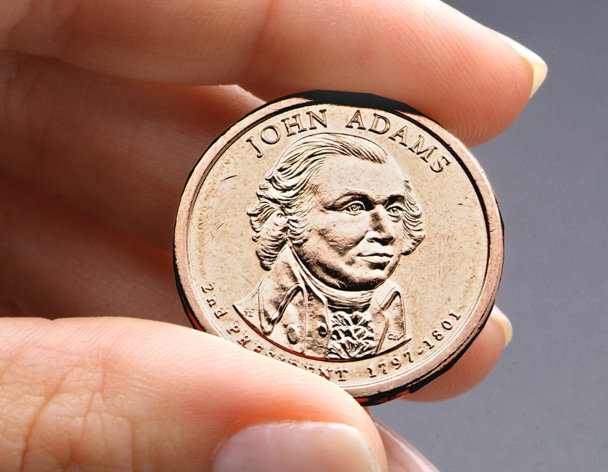
Congress looks at doing away with the $1 bill


.....WASHINGTON (AP) — American consumers have shown about as much appetite for the $1 coin as kids do their spinach. They may not know what's best for them either. Congressional auditors say doing away with dollar bills entirely and replacing them with dollar coins could save taxpayers some $4.4 billion over the next 30 years.

Vending machine operators have long championed the use of $1 coins because they don't jam the machines, cutting down on repair costs and lost sales. But most people don't seem to like carrying them. In the past five years, the U.S. Mint has produced 2.4 billion Presidential $1 coins. Most are stored by the Federal Reserve, and production was suspended about a year ago

The latest projection from the Government Accountability Office on the potential savings from switching to dollar coins entirely comes as lawmakers begin exploring new ways for the government to save money by changing the money itself.

The Mint is preparing a report for Congress showing how changes in the metal content of coins could save money.

The last time the government made major metallurgical changes in U.S. coins was nearly 50 years ago when Congress directed the Mint to remove silver from dimes and quarters and to reduce its content in half dollar coins. Now, Congress is looking at new changes in response to rising prices for copper and nickel.

At a House subcommittee hearing Thursday, the focus was on two approaches:
—Moving to less expensive combinations of metals like steel, aluminum and zinc.
—Gradually taking dollar bills out the economy and replacing them with coins.

The GAO's Lorelei St. James told the House Financial Services panel it would take several years for the benefits of switching from paper bills to dollar coins to catch up with the cost of making the change. Equipment would have to be bought or overhauled and more coins would have to be produced upfront to replace bills as they are taken out of circulation.

But over the years, the savings would begin to accrue, she said, largely because a $1 coin could stay in circulation for 30 years while paper bills have to be replaced every four or five years on average.
"We continue to believe that replacing the note with a coin is likely to provide a financial benefit to the government," said St. James, who added that such a change would work only if the note was completely eliminated and the public educated about the benefits of the switch.

Even the $1 coin's most ardent supporters recognize that they haven't been popular. Philip Diehl, former director of the Mint, said there was a huge demand for the Sacagawea dollar coin when production began in 2001, but as time wore on, people stayed with what they knew best.

"We've never bitten the bullet to remove the $1 bill as every other Western economy has done," Diehl said. "If you did, it would have the same success the Canadians have had."
Beverly Lepine, chief operating officer of the Royal Canadian Mint, said her country loves its "Loonie," the nickname for the $1 coin that includes an image of a loon on the back. The switch went over so well that the country also went to a $2 coin called the "Toonie."

Rep. Bill Huizenga, R-Mich., affirmed that Canadians have embraced their dollar coins. "I don't know anyone who would go back to the $1 and $2 bills," he said.

That sentiment was not shared by some of his fellow subcommittee members when it comes to the U.S. version.

Rep. Lacy Clay, D-Mo., said men don't like carrying a bunch of coins around in their pocket or in their suits. And Rep. Carolyn Maloney, D-N.Y., said the $1 coins have proved too hard to distinguish from quarters.

"If the people don't want it and they don't want to use it," she said, "why in the world are we even talking about changing it?"
"It's really a matter of just getting used to it," said Diehl, the former Mint director.
Several lawmakers were more intrigued with the idea of using different metal combinations in producing coins.

Rep. Steve Stivers, R-Ohio, said a penny costs more than 2 cents to make and a nickel costs more than 11 cents to make. Moving to multiplated steel for coins would save the government nearly $200 million a year, he said.

The Mint's report, which is due in mid-December, will detail the results of nearly 18 months of work exploring a variety of new metal compositions and evaluating test coins for attributes as hardness, resistance to wear, availability of raw materials and costs.

Richard Peterson, the Mint's acting director, declined to give lawmakers a summary of what will be in the report, but he said "several promising alternatives" were found.

http://news.yahoo.com/congress-looks-doing-away-1-bill-083418974--politics.html

...

Tuesday, October 9, 2012

Tuesday 10-09-12

Claire Wolfe


Your right to sell your stuff

Saturday, October 6th, 2012 Is your right to sell your very own used stuff in peril?

Jennifer Waters’ Consumer Confidential says:
Tucked into the U.S. Supreme Court’s busy agenda this fall is a little-known case that could upend your ability to resell everything from your grandmother’s antique furniture to your iPhone 4.
The short version: In the U.S. courts have long recognized that once we buy something — whether it’s a Van Gogh painting or a Toyota — it’s ours and we can re-sell it.
Not so in some other parts of the world — or at least not without paying obeisance to the original maker. And now one more attempt is being made to impose other people’s laws on us. So potentially, if your car has Japanese parts or you bought that dress on a trip to Italy, it might become illegal to re-sell it.

If Ms. Waters is right, and the Nazgul do their frequently statist thing, we could technically lose The All-American Garage Sale. Or eBay. Or Craigslist. Or … perhaps even gun trading?

Sounds alarming.
—–
Now let’s stop a second. And give a hearty, insouciant Freedom Outlaw laugh (once again) to the arrogance of Our Rulers.
Then let’s get some practicalities out of the way before we continue slapping our thighs in contemptful, Outlaw glee.
The Supremes just might choose to find against statism this time. If the Nazgul rule bad, Congress could afterward choose to restore Our Right to eBay via legislation.
But no matter what they do, if it hinders us from selling our stuff it’s just chaos-causing nonsense.
Remember the diktat a couple of years back that was going to prevent anybody from selling used kids clothes, toys, blankies, etc.? (Might contain lead, you know.) It stunk. It also got howled down by an angry public. Oh, sorry. I mean the ruling got “clarified.”
And even if it hadn’t, do you believe for one minute that millions of mommies and daddies around the country would have said, “Oh, well, then. I guess we’d better landfill Baby’s old stuff in lead-lined containers to keep the world safe from lead that might be in it. We don’t dare defy the Might of the Federal Government to make a buck off it”? Hahahahaha! Not one freaking chance.
No matter what the Supreme Court says, no matter what Congress does or doesn’t do, this is just the sort of issue that — hey, ain’t it grand! — produces more Outlaws. And more ordinary, everyday, going-about-our-business contempt for Authoritah.

—–
Oh, I’m sure if the Supremes rule that we have to pay the copyright and patent holders to resell our stuff, some unpleasant mainstream accommodations will be made. Maybe there will be licenses required for resale with money going into a fund to pay off the original manufacturers. Rembrandt’s wife’s third cousin 10 generations removed and Whistler’s mother’s aunt’s brother’s great-great-grandson will sue for a “fair share” when somebody tries to sell a masterpiece. Companies or individuals with big financial interests will make life miserable for big institutions that facilitate that resale of goods — and make things more expensive for those who try to resell in such aboveboard ways. An “eBay tax,” anyone?
But as for the rest of us, we’ll just slip further between the cracks, further underground, further into having a Good Bad Attitude. Nobody will stop doing what they do. If some damn law or ruling makes it difficult or expensive, we’ll just do it in a different way. And millions more will realize that the gummint, despite a lifetime of propaganda, doesn’t really exist to help them … and isn’t really powerful enough to hinder them, either.
And so power crumbles …

—–

(H/T H.)

http://www.backwoodshome.com/blogs/ClaireWolfe/2012/10/06/your-right-to-sell-your-stuff/

Because of Government regulation and so forth, we are in a very insecure situation here in the US we lack the infastructure to manufacture our own complete computer systems.  We rely on out side the US companies to provide the systems.  This is crazy, at the link you will find a short news report on this, it is worth listening too, imo.

http://wtop.com/807/3070381/US-concerns-grow-over-Chinese-espionage

Tuesday, June 19, 2012

Tuesday 06-19-12

Something that bears watching.

Militants cross into Israel from Egypt, 1 killed

JERUSALEM (AP) - Militants crossed from Egypt's turbulent Sinai Peninsula into southern Israel on Monday and opened fire on civilians building a border security fence, defense officials said. One of the Israeli workers was killed, and two assailants died in a gunbattle with Israeli troops responding to the attack.

No group claimed responsibility for the attack, which underscored the growing lawlessness in the Sinai desert since longtime Egyptian President Hosni Mubarak was toppled by a popular uprising last year.


Military spokeswoman Lt. Col Avital Leibovich said the assailants have not been identified but acknowledged that defense officials suspected Palestinian militants in the Hamas-run Gaza Strip, which also borders the Sinai desert in that same area, might have been involved.


Several hours after the attack, an Israeli airstrike killed two men riding a motorcycle in the northern Gaza Strip near the Israeli border. The Islamic Jihad militant group said the men were members on a "reconnaissance" mission and vowed revenge. Military officials said the incident was not connected to the earlier infiltration from Egypt.


Israeli security officials have grown increasingly anxious about the security situation in the Sinai since Mubarak's ouster. Continued political turmoil in Egypt, weak policing in the Sinai and tough terrain have all encouraged Islamic militant activity in the area. The mountainous desert now harbors an array of militant groups, including Palestinian extremists and al-Qaida-inspired jihadists, Egyptian and Israeli security officials say. The tumultuous situation surrounding Egyptian elections, in which Islamic groups made a strong showing, has added to Israeli unease.


Israeli Defense Minister Ehud Barak told Army Radio that there has been "a worrisome deterioration of Egyptian control" over the Sinai. Barak said he expected the winner of this week's presidential elections in Egypt to honor the country's international obligations - an apparent reference to Egypt's 1979 peace treaty with Israel. The Muslim Brotherhood has said it would respect the historic peace accord but that it would also seek modifications.

Vice Premier Shaul Mofaz, a former defense minister and military chief, said he hoped Israel could conduct a security dialogue with the Egyptians and demand more forceful policing in the Sinai.

"No doubt Sinai has become a security problem," Mofaz told Army Radio. "Today's incident ratchets it up a notch."


There was no immediate comment from Egypt on the attack.

Following Mubarak's ouster, Israel stepped up construction of a security fence across the 230-kilometer (150-mile) border with Egypt in a bid to keep out both militants and illegal migrants from Africa. The government has said it expects the fence to be completed by the end of the year.

In Monday's attack, two civilian vehicles carrying construction workers were driving toward the security fence when militants activated a roadside bomb and opened light arms and anti-tank fire at them, said Leibovich, the military spokeswoman.


One of the vehicles was struck and turned over into a nearby ditch, killing one worker, she said. Israeli troops rushed to the area and engaged in a gunbattle with the militants. One militant, who was carrying a large explosive device, blew up, she said. Another militant, and possibly two others, also died, but other gunmen may have escaped back into Egypt, she said.


The militants were carrying camouflage uniforms, flak jackets, helmets and assault rifles, she said. There was no word on their identities or membership in any of a wide range of armed groups.


Leibovich said Israelis living in five small communities in the area were instructed to lock themselves inside their homes, and two major southern roads were closed to civilian traffic while troops scoured the area for other militants. The military later concluded no other gunmen were in the area.


Israel had been bracing for the possibility of more attacks from the Sinai after two rockets believed fired from there struck southern Israel over the weekend, though Leibovich said it was unclear whether the two events were related.

The magnitude of the growing threat from Sinai was driven home last August, when gunmen from Sinai infiltrated Israel and ambushed vehicles on a desert highway, killing eight Israelis. Six Egyptians were killed in Israel's subsequent hunt for the militants, causing a diplomatic crisis between the two neighbors that ended with an Israeli apology.


The deadly August attack shattered decades of calm along the frontier area, prompting officials on both sides of the border to examine security arrangements and pushing Israel to speed up construction of the border fence.


As part of its landmark first peace treaty with an Arab state, Israel agreed in 1979 to return the Sinai, captured in the 1967 Mideast war, to Egypt, but insisted the vast desert triangle separating Asia from Africa be significantly demilitarized. As the frontier area grew more volatile following Mubarak's ouster, Israel allowed thousands more Egyptian troops to police the area and has beefed up its own military deployment along the border.

The reinforced security deployment has not quieted the Sinai, however, and democratic elections for parliament and president did not resolve the instability in Egypt, which has Israel worried about the future of the 1979 peace accord.

The ruling Egyptian military dissolved the newly elected parliament and assumed sweeping powers subordinating the president and ensuring their hold on the state. The Muslim Brotherhood, which declared early Monday that its candidate, Mohammed Morsi, won this week's presidential election, has challenged the military's power grab, raising the prospect of a power struggle between Egypt's two strongest forces.

http://apnews.myway.com/article/20120618/D9VFIAO00.html

It is amazing, they call it violence against their employee but they do it to the public millions of times a day.

Woman accused of groping TSA agent

FORT MYERS - A lot of people get peeved about TSA pat downs. But a Bonita Springs woman is accused of groping an agent at Southwest Florida International Airport and it's all on tape!


It happened on her way to Cleveland, Ohio. Airline passenger Carol Price says while going through security to catch her flight, a TSA agent groped her.

In response, the video shows Price put down her carry-on bags, turn to a TSA supervisor and grab her - allegedly without permission - to show the supervisor what Price says she went through.

"It was a customer complaint of an extremely inappropriate search," said Price's defense attorney John Mills.

Mills says another TSA agent first groped Price's genitals and breasts.

"She did not touch the supervisor as intrusively as she was touched," Mills said.

Price says the TSA agent wasn't following protocol - and she should know.

Price is a former TSA agent who worked at the airport until a few years ago. She got along with some, but not all of her co-workers, and says her pat down was personal.

"She's obviously been through training and knew this lady," Mills said.


But Mills admits Price was already emotional that day.

"She was going to her brother's funeral," he said, adding that she did not make it.

Instead, Price was removed from the flight, taken to jail and now faces misdemeanor battery charges.

She has pleaded not guilty

"Ms. Price just wants her name cleared," Mills said.

The TSA says: "The pat down was conducted correctly in accordance with our procedures. Violence against our officers who work every day to keep the traveling public safe is unacceptable."

http://www.nbc-2.com/story/18819291/woman-accused-of-groping-tsa-agent

Tuesday, November 15, 2011

Tuesday 11-15-11

Here is a neat page that would give you at least an idea of what would happen if a nuke went off near you. A little pessimistic like that stupid story on the beach, but could be useful in planning, if you can get by all the adds.

Nuke attack projection: Your block likely doomed

How would you fare during a nuclear war? It's a good scenario to anticipate, particularly for as attractive a target as the WTOP listening area.

A new website maps out the blast and effect radius of six kinds of nuclear explosions. Attacks range from an 18 kiloton device such as the products of the Manhattan Project, to such a meteor that would kill the dinosaurs, like last week's 2005 YU55 that blew by at a distance nearer than the moon.

Say, for example, a 1 megaton LGM-30 Minuteman struck the D.C. area in the heart of the National Mall. That missile, the only land-based Intercontinental Ballistic Missile currently in service in the U.S., would send a shock wave as far as Annandale, according to WouldISurviveANuke.com.

For Capitol Hill residents: "You're Dead! Congratulations, You never saw it coming. Consider yourself lucky that there was no suffering. Not even the cockroaches survived," according to the site's analysis.

Arlington would fare better, but still not great: "You're alive! ...But not for long. The heat from the blast has caused head to toe second degree burns. You'll probably die within the coming weeks from radiation sickness."

Hyattsville residents could make it: "Alive! But your lifespan suffered. The heat from the blast has caused 1st degree burns. Cancer is just a matter of time for you."

Springfielders are in the clear: "Alive! But do you want to be? You live in the middle of nowhere or are lucky. The planet isn't looking good though. Get ready for some great skiing in the incoming nuclear winter!"

Check out the website for more information on where is best to position yourself in the case of a series of nuclear attacks.

And rest assured. If a meteor like YU55 were to have hit D.C., everything from northern Brazil to the top of Greenland would be toast instantly.

http://www.wouldisurviveanuke.com/

Busted! Two New Fed GPS Trackers Found on SUV

As the Supreme Court gets ready to hear oral arguments in a case Tuesday that could determine if authorities can track U.S. citizens with GPS vehicle trackers without a warrant, a young man in California has come forward to Wired to reveal that he found not one but two different devices on his vehicle recently.

The 25-year-old resident of San Jose, California, says he found the first one about three weeks ago on his Volvo SUV while visiting his mother in Modesto, about 80 miles northeast of San Jose. After contacting Wired and allowing a photographer to snap pictures of the device, it was swapped out and replaced with a second tracking device. A witness also reported seeing a strange man looking beneath the vehicle of the young man’s girlfriend while her car was parked at work, suggesting that a tracking device may have been retrieved from her car.

Then things got really weird when police showed up during a Wired interview with the man.

The young man, who asked to be identified only as Greg, is one among an increasing number of U.S. citizens who are finding themselves tracked with the high-tech devices.

The Justice Department has said that law enforcement agents employ GPS as a crime-fighting tool with “great frequency,” and GPS retailers have told Wired that they’ve sold thousands of the devices to the feds.

But little is known about how or how often law enforcement agents use them. And without a clear ruling requiring agents to obtain a “probable cause” warrant to use the devices, it leaves citizens who may have only a distant connection to a crime or no connection at all vulnerable to the whimsy of agents who are fishing for a case.

The invasive technology, for example, allows police, the FBI, the Drug Enforcement Administration and other agencies to engage in covert round-the-clock surveillance over an extended period of time, collecting vast amounts of information about anyone who drives the vehicle that is being tracked.

“A person who knows all of another’s travels can deduce whether he is a weekly church goer, a heavy drinker, a regular at the gym, an unfaithful husband, an outpatient receiving medical treatment, an associate of particular individuals or political groups — and not just one such fact about a person, but all such facts,” wrote U.S. Appeals Court Judge Douglas Ginsburg in a recent ruling that the Supreme Court will be examining this week to determine if warrants should be required for use with trackers.

Greg says he discovered the first tracker on his vehicle after noticing what looked like a cell phone antenna inside a hole on his back bumper where a cable is stored for towing a trailer. The device, the size of a mobile phone, was not attached to a battery pack, suggesting the battery was embedded in its casing.


The first GPS tracker found was slipped into a fabric sleeve, containing magnets, and placed on the underside of the vehicle in the wheel well of the spare tire.
Photo: Jon Snyder/Wired.com
A week later when he was back in San Jose, he checked the device, and it appeared to have been repositioned slightly on the vehicle to make it less visible. It was placed on the underside of the car in the wheel well that holds a spare tire.

Greg, a Hispanic American who lives in San Jose at the home of his girlfriend’s parents, contacted Wired after reading a story published last year about an Arab-American citizen named Yasir Afifi who found a tracking device on his car. Greg wanted to know what he should do with the device.

Afifi believed he was being tracked by authorities for six months before a mechanic discovered the device on his car when he took it into a garage for an oil change. He apparently came under surveillance after the FBI received a vague tip from someone who said Afifi might be a threat to national security. Afifi has filed a suit against the government, asserting that authorities violated his civil liberties by placing the device on his vehicle without a warrant and without suspicion of a crime. His attorney, Zahra Billoo, told Wired this week that she’s requested a stay in her client’s case, pending a ruling by the Supreme Court in the GPS tracking case now before it.

Greg’s surveillance appears to involve different circumstances. It most likely involves a criminal drug investigation centered around his cousin, a Mexican citizen who fled across the border to that country a year ago and may have been involved in the drug trade as a dealer.

“He took off. I think he was fleeing. I think he committed a crime,” Greg told Wired.com, asserting that he himself is not involved in drugs.

Greg says he bought the SUV from his cousin in June, paying cash for it to a family member. He examined the car at the time and found no tracking device on it. A month later, he drove his cousin’s wife to Tijuana. Greg says he remained in Mexico a couple of days before returning to the U.S.


The first GPS tracker, out of its sleeve. Photo courtesy of Greg.
It’s possible the surveillance began shortly after his return, but Greg discovered the device only about three weeks ago during his visit to Modesto. The device was slipped into a sleeve that contained small magnets to affix it to the car.

On Tuesday, Nov. 1, Wired photographer Jon Snyder went to San Jose to photograph the device. The next day, two males and one female appeared suddenly at the business where Greg’s girlfriend works, driving a Crown Victoria with tinted windows. A witness reported to Greg that one of the men jumped out of the car, bent under the front of the girlfriend’s car for a few seconds, then jumped back into the Crown Victoria and drove off. Wired was unable to confirm the story.

The following day, Greg noticed that the GPS tracker on his own car had been replaced with a different tracker, this one encased in a clam shell cover attached to a large round magnet to hold the device to the car. The device was attached to a 3.6 VDC Lithium Polymer rechargeable battery.

There was no writing on the tracker to identify its maker, but a label on the battery indicated that it’s sold by a small firm in Farmingdale, New York, called Revanche. A notice on a government web site last June indicates that it was seeking 500 of the batteries and 250 battery chargers for the Drug Enforcement Administration. A separate notice on the same site in 2008 refers to a contract for what appears to be a similar Revanche battery. The notice indicates the batteries work with GPS devices made by Nextel and Sendum.

A spokeswoman with the DEA’s office in San Francisco, however, declined to say if the device on Greg’s vehicle was theirs.

“We cannot comment on our means or methods that we use, so I cannot provide you with any additional information,” said DEA spokeswoman Casey McEnry.


Second GPS tracker with clam shell casing and Lithium Polymer battery.
Photo: Jon Snyder/Wired.com
The second device on Greg’s vehicle appears to be a Sendum PT200 GPS tracker with the factory battery swapped out and replaced with the Revanche battery. The Sendum GPS tracker is marketed to private investigators, law enforcement and transportation security managers and sells for about $430 without the battery. With the factory battery “it will last 7-15 days reporting every hour in a good cellular coverage zone,” according to marketing literature describing it, and it uses CDMA cellular communications and gpsOne location services to determine its location.

When this reporter drove down to meet Greg and photograph the second tracker with photographer Snyder, three police cars appeared at the location that had been pre-arranged with Greg, at various points driving directly behind me without making any verbal contact before leaving.

After moving the photo shoot to a Rotten Robbie gas station a mile away from the first location, another police car showed up. In this case, the officer entered the station smiling at me and turned his car around to face the direction of Greg’s car, a couple hundred yards away. He remained there while the device was photographed. A passenger in the police car, dressed in civilian clothes, stepped out of the vehicle to fill a gas container, then the two left shortly before the photo shoot was completed.

The Obama administration will be defending the warrantless use of such trackers in front of the Supreme Court on Tuesday morning. The administration, which is attempting to overturn a lower court ruling that threw out a drug dealer’s conviction over the warrantless use of a tracker, argues that citizens have no expectation of privacy when it comes to their movements in public so officers don’t need to get a warrant to use such devices.

It’s unclear if authorities obtained a warrant to track Greg’s vehicle. While Greg says he’s committed no crimes and has nothing to hide, the not-so-stealthy police maneuver at his girlfriend’s place of employment makes it look to others like she’s involved in something nefarious, he says. That concerns him.

It concerns attorney Billoo as well.

“For a lot of us, it’s like, Well I’m not selling cocaine, so let them put a tracking device on the car of [a suspect] who is selling cocaine,” Billoo says. “And I’m not a terrorist, so let them put the device on someone [suspected of being] a terrorist. But it shouldn’t be unchecked authority on the part of police officers. If law enforcement doesn’t care to have their authority checked, then we’re in a lot of trouble.”

http://www.wired.com/threatlevel/2011/11/gps-tracker-times-two/all/1